




Natural Gas Price Forecast: Is NG=F Setting Up One Last Winter Spike?
Henry Hub near $3.9, February’s $7.46 blow-off, Minnesota’s 15x bill shock and a 38% TTF surge expose how fragile gas pricing really is | That's TradingNEWS
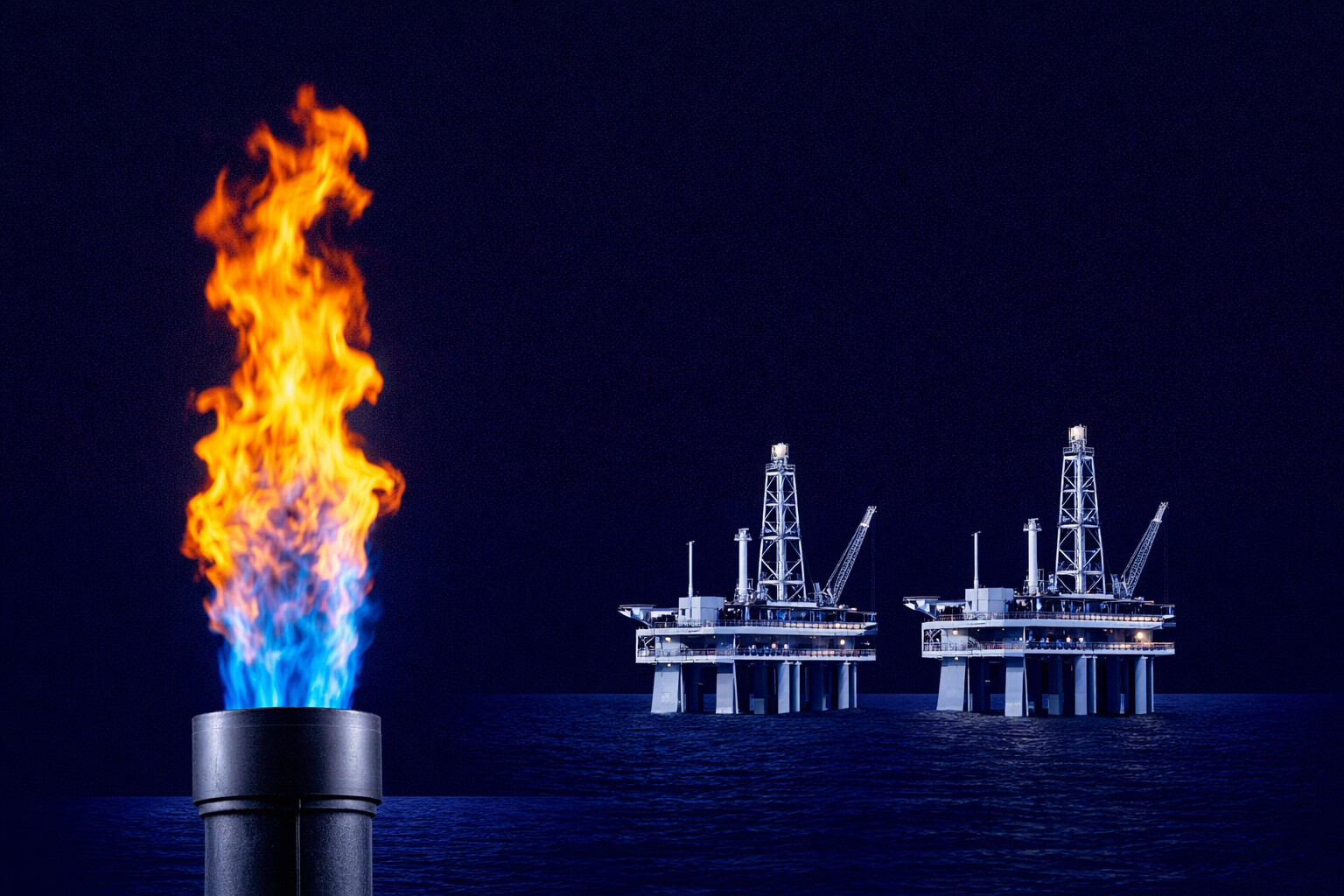
Natural Gas (NG=F) price map from Henry Hub to TTF and local shock zones
Natural gas is trading in a split market: global benchmarks are firm to bullish while some local hubs and utilities have seen explosive, weather-driven spikes. The March NG=F Henry Hub futures contract trades just under $3.90 per mmBtu after a violent expiry on the front month, while spot moves in recent days briefly pushed front-month prices above $4.35 per mmBtu, an 11% daily jump at one point, before easing back. In Europe, Dutch TTF has surged to about €39.1 per MWh (roughly $46.6), up around 38% from about €29 at the start of January as cold weather, rapid storage draws and geopolitical risk reset risk premia. At the retail level, the shock is even sharper: some Minnesota utilities expected wholesale costs near $4.70 per dekatherm and instead saw intraday prices spike toward $75 per dekatherm, over fifteen times the planning assumption. The result is a curve where paper NG=F looks like a controlled winter premium around $3.8–$4.0, but physical and regional indices still display stress pockets, especially during cold snaps and pipeline bottlenecks.
Henry Hub NG=F futures: backwardation, expiry whiplash and a $4.81 weather target
The futures structure around Henry Hub shows how unstable winter pricing remains. The February NG=F contract expired at $7.460 per mmBtu, reflecting the peak of the storm-driven squeeze. As soon as that front month rolled off, the more liquid March contract settled near $3.732 per mmBtu and then traded around $3.878, roughly 1% lower pre-market on January 30. That gap between a $7.46 expiry and a sub-$4 active month is classic backwardation: near-term scarcity priced into the front contract while the strip assumes a normalization of demand and supply into late winter. Technical projections built on current weather models point to an upside scenario where, if colder-than-normal conditions persist into mid-February, March NG=F could test the $4.80 area. That target aligns with a market that respects the $3.50–$3.60 support band but still assigns a risk premium to additional storage draws and potential freeze-offs. For now, the message is clear: the market is willing to pay a high price to cover immediate risk but does not yet believe that $6–$7 gas is sustainable beyond the immediate shock.
Technical structure in NG=F: 200-day EMA support and a late-winter spike setup
Technically, NG=F looks like it is building a medium-term floor rather than collapsing back to the 2023–2024 lows. Price action clusters around the $3.80–$3.90 band, with the 200-day exponential moving average sitting just above $3.50. That moving average, combined with the round-number floor near $3.50, forms a key demand zone. Below that, the last meaningful pivot sits closer to $3.00. The futures curve shows extreme backwardation against spot readings closer to $5 at the height of the recent storm, emphasizing how much of the stress was timing-related rather than structural. Oscillators on daily charts typically sit in neutral-to-slightly bullish territory, not yet signaling an exhausted spike. The price is not hugging the upper Bollinger band the way it did when February blew out to $7.460, but volatility remains well above off-season norms. This is the anatomy of a market that has already punished shorts but still keeps optionality open for one more upside leg before the heating season ends.
U.S. supply, storm damage and storage math behind NG=F
On the supply side, production disruption has eased but not vanished. During the worst of the winter blast, U.S. dry gas output fell by roughly 18.1 billion cubic feet per day compared with baseline levels. By Thursday, the hit had narrowed to about 6.1 bcfd, but the system had already taken a meaningful punch. That pullback landed on top of heavy storage withdrawals. Working gas in storage fell by 242 Bcf in the week ending January 23, bringing inventories to 2,823 Bcf. Even after that draw, stocks still stand about 206 Bcf above the same week last year and 143 Bcf above the five-year average of 2,680 Bcf. In the South Central region, which anchors much of the Henry Hub complex, a sizeable 89 Bcf withdrawal cut into the local surplus and briefly tightened the balance, helping lift Permian prices off their winter lows and supporting Waha-linked hubs. The combination of still-elevated national storage and aggressive regional draws explains the current pricing: NG=F is no longer pricing a full-blown shortage, but the market refuses to drop back to sub-$3 levels while inventory cushions are being eroded by every new cold surge.
Weather and NG=F: nationwide freeze, coastal cyclone risk and an uneven warm-up
Weather remains the dominant driver for NG=F in the short term. The recent cold wave dragged temperatures in the Twin Cities down to around minus 21°F on January 23 and as low as minus 29°F in the Duluth area. Wind-chill issues extended across the Midwest and much of the U.S., pushing heating demand sharply higher. Forecasts for the next 6–10 days show below-normal temperatures for most of the U.S. east of the Mississippi River, while the West and parts of the Plains are expected to see above-normal readings. The Weather Prediction Center has flagged a rapidly intensifying coastal storm targeting the Carolinas and the broader Eastern Seaboard, with heavy snow, strong winds, blizzard conditions and coastal flooding risks. Beyond the immediate event, extended outlooks mention hazardous cold threats into next week for the Mid-Atlantic and Northeast. That pattern, if it verifies, supports the idea that storage draws will remain above average into early February and gives the $4.80 upside scenario for NG=F real credibility. At the same time, some producers, including voices out of North Dakota’s pipeline network, already talk about relatively mild conditions and limited precipitation in coming weeks, suggesting they do not expect further major curtailments. The market is trading between those narratives: enough cold to sustain a premium, but not enough confidence in prolonged Arctic conditions to justify another parabolic spike without fresh data.
Minnesota’s 15x price shock: how local gas bills decoupled from NG=F
The most dramatic evidence of localized stress did not show up on the Henry Hub chart but on utility procurement sheets in Minnesota. LDCs such as CenterPoint Energy, Xcel Energy, Minnesota Energy Resources and Great Plains Natural Gas had budgeted to pay around $4.70 per dekatherm through the cold spell. Instead, wholesale offers blew out to roughly $75 per dekatherm at the peak on January 23 and again on January 27 for some service territories, more than fifteen times the expected level. The reason was simple and brutal: a long-lasting, nationwide cold event pushed demand high across regions that normally do not compete with Minnesota for molecules, including southern states like Louisiana. When buyers from traditionally mild-weather markets chase incremental supply at the same time as Midwestern utilities, price discovery becomes an auction. Despite that spike, utilities insist that there was no physical shortage and that pipeline capacity held, but bills will reflect the cost of covering those days. Regulators already have filings showing the uplift, and customers will see the pass-through over time. Xcel has also layered in a 6.8% rate increase on natural gas in the state from January 1, compounding the shock. Nationally, average wholesale costs climbed about $3 between 2024 and 2025, and the Energy Information Administration expects elevated costs to linger through 2026. Even so, Minnesota executives emphasize that this week’s spike remained far below the Winter Storm Uri chaos of 2021, when wholesale gas briefly touched about $230 per dekatherm in some markets. That comparison matters: the system is stressed, but it is not repeating the most extreme failure of the last cycle.
European TTF and LNG: TTF rallies 38% as storage drains and Hormuz risk re-prices gas
Across the Atlantic, European benchmark prices show how quickly sentiment has flipped. Front-month Dutch TTF has risen from roughly €29 per MWh at the start of January to about €39.085 per MWh, a gain of around 38%. The absolute level is still well below the panic highs of 2022, but the trajectory is unmistakably higher. Cold snaps across Europe and the U.S., combined with Arctic conditions in parts of Asia, have driven global benchmark prices upward. In Europe, below-normal winter temperatures have produced the fastest pace of storage withdrawals in roughly five years as heating demand soaks up gas. As inventories drain, speculative money has shifted stance: fund managers have moved from a net short of about 55.1 TWh in TTF derivatives to a net long of 57.7 TWh, flipping more than 110 TWh in net positioning in a week. On top of weather and storage, geopolitics has returned as a catalyst. Rhetoric between the U.S. and Iran has escalated, and traders are suddenly pricing in the risk that flows through the Strait of Hormuz could be disrupted. Qatar, which ships roughly 19% of global LNG exports, relies on that chokepoint; any credible threat there tightens perceived LNG availability worldwide and spills over into both TTF and NG=F via the seaborne market. A single 4% daily jump in TTF on Thursday captures that repricing.
Read More
-
JPIE ETF Price Forecast: Short-Duration Income ETF Near 52-Week High
30.01.2026 · TradingNEWS ArchiveStocks
-
Ripple XRP ETFs Hit Record Outflows As XRPI, XRPR Crash Toward Cycle Lows
30.01.2026 · TradingNEWS ArchiveCrypto
-
Oil Price Forecast: Trade Rich to a $60 Glut Anchor as Brent Breaks Above $70
30.01.2026 · TradingNEWS ArchiveCommodities
-
USD/JPY Price Forecast - USDJPY=X Jumps Back Above 154 as Warsh Nomination Recharges Dollar Bulls
30.01.2026 · TradingNEWS ArchiveForex
LNG flows, Jones Act constraints and their feedback into NG=F
The storm revealed how the U.S. natural gas system can still be forced into unusual patterns despite its status as a top LNG exporter. During the peak of the cold event and pipeline congestion, the country briefly imported LNG, underscoring how localized bottlenecks and shipping rules can override aggregate surplus. Commentators pointed directly at the Jones Act, which restricts domestic marine transport to U.S.-flagged vessels, making it difficult to move gas by sea from one U.S. region to another even when liquefaction and regasification capacity exist. At the same time, feedgas flows to Gulf Coast LNG export terminals dropped to around 10.9 Bcf per day on January 25, the lowest in a year, then rebounded to about 15.8 Bcf per day by January 28 as temperatures moderated and regional spot prices eased. That swing highlights how LNG demand for U.S. gas can amplify domestic volatility: when local spot prices explode, exports briefly retreat; when domestic prices cool while overseas markers like TTF spike, feedgas ramps back up to capture margins. Delivered LNG prices to northwest Europe for late February even fell below the implied feedgas cost for some U.S. Atlantic terminals at the storm peak, a clear sign that the arbitrage window had temporarily flipped. For NG=F, the message is that LNG is no longer a one-way outlet; it is an active balancing valve that can shift 5–6 Bcf per day in a matter of sessions.
North American hub and forward curves: regional volatility vs Western Canada stability
Hub-level pricing across North America reinforces the idea of a fragmented market. In the Southeast, Florida Gas Transmission’s citygate price has printed north of $23 per mmBtu, while key Transco zones in the eastern U.S. have traded around $10 per mmBtu during the coldest days. Northeast forward curves, including hubs like Iroquois Zone 2 and Algonquin, show extreme winter 2026 spikes near $50 per mmBtu, followed by a steep slide into spring and then a renewed rise toward the low-teens by early 2028. That pattern prices in recurring winter stress events and structurally tight regional takeaway without assuming a permanent national shortage. Western Canada tells a different story. Benchmarks such as NOVA/AECO C have remained comparatively calm, reflecting stable local supply and infrastructure that was less exposed to the recent U.S. freeze. Cross-border flows mean that Canadian gas still backstops U.S. demand, but the AECO resilience emphasises that not all basins face the same risk profile. Permian-linked hubs, meanwhile, benefited from the South Central storage draw and the associated tightening, with spot prices holding well above earlier winter lows even as production recovers from storm-related freeze-offs. For NG=F, these divergences highlight why Henry Hub trades as a blended signal rather than a perfect reflection of regional stress.
Seasonality and fracking response: one more winter push before the spring short thesis
Natural gas remains one of the most seasonal commodities on the board, and the current setup fits that script. Heating demand in winter can swing quickly with each cold or warm pattern, but the structural response of North American producers has become faster. Once temperatures moderate and ground conditions improve, drilling and completion activity in shale plays tends to accelerate, and associated gas from oil-directed plays also grows. That supply response usually starts to show up toward late winter and into spring, adding downward pressure on NG=F as storage rebuilds. The current base around $3.50–$3.90, combined with the strong reaction to weather shocks, argues for a likely path where one more rally unfolds before the market seriously entertains a sustained short bias into the injection season. If February brings another strong draw, storms in the East and persistent cold into mid-month, a move from the current $3.8–$3.9 band toward the $4.5–$4.8 zone is plausible. After that, absent new geopolitical disruptions or a surprise collapse in production, the risk profile tilts toward lower prices into late Q1 and Q2 as storage stops bleeding and injections restart.
Risk map for NG=F: weather, geopolitics, policy noise and macro spillovers
The key risks around NG=F are stacked but asymmetric. Weather remains the primary catalyst: a mild February that undercuts current forecasts would quickly soften the curve and push prices back toward $3.25–$3.50, especially if storage draws undershoot expectations. Conversely, a repeat of deep Arctic outbreaks or a failure in infrastructure that replicates parts of the 2021 Uri pattern would send front-month contracts sharply higher again, with local hubs outperforming Henry Hub to the upside. Geopolitically, any escalation in U.S.–Iran tensions that threatens shipping through the Strait of Hormuz would squeeze LNG flows and extend the TTF rally, pulling NG=F higher as U.S. exports capture wider margins. Policy noise—such as debates in Washington that flirt with a brief government shutdown—matters less directly for gas fundamentals but can affect risk appetite across markets and indirectly influence speculative positioning. Finally, cross-commodity factors matter: gold’s run toward $5,000 per ounce, silver crashes and equity corrections are signs of a market wrestling with inflation, rates and risk-off pulses. Each of those can either reinforce hedging demand for gas or drain speculative capital from energy futures, depending on how they evolve.
Natural Gas (NG=F) stance: speculative Buy with a bullish bias into late winter
Taking all data together, NG=F looks like a speculative Buy with a clear bullish bias into the remainder of winter, not a long-term hold at any price. The contract trades around $3.8–$3.9 per mmBtu, finds strong structural support near $3.50 at the 200-day EMA, and sits in a market where storage remains above average but is now drawing down quickly, with weekly withdrawals like 242 Bcf nationally and 89 Bcf in the South Central region proving that balances can tighten in a hurry. Weather models still project below-normal temperatures for key demand centers east of the Mississippi over the next 6–10 days, and storm risks along the East Coast add further upside optionality. European TTF’s 38% jump, a global shift in speculative positioning from net short to net long, and LNG feedgas rebounding toward 16 Bcf per day show that gas is back in favor as a trade. At the same time, the curve’s backwardation, the earlier February blow-off at $7.460 and the likely production rebound as freeze-offs clear argue against chasing any spike blindly. From a pure risk-reward standpoint, the cleaner setup is to treat dips toward $3.50–$3.60 as entry zones for tactical longs targeting a $4.5–$4.8 band if February weather cooperates, while respecting that once winter risk fades and the EIA storage trajectory stabilizes, the narrative will shift toward short ideas into spring. In short: NG=F is bullish for the remaining winter window with a Buy bias for active traders, but that stance should flip to a much more cautious or even outright bearish view once one more upside leg and the seasonal supply response play out.