

Alibaba Stock Price Forecast - BABA Falls to $154 After 72% Profit Drop — AI CapEx Drives 34.5% Cloud Boom
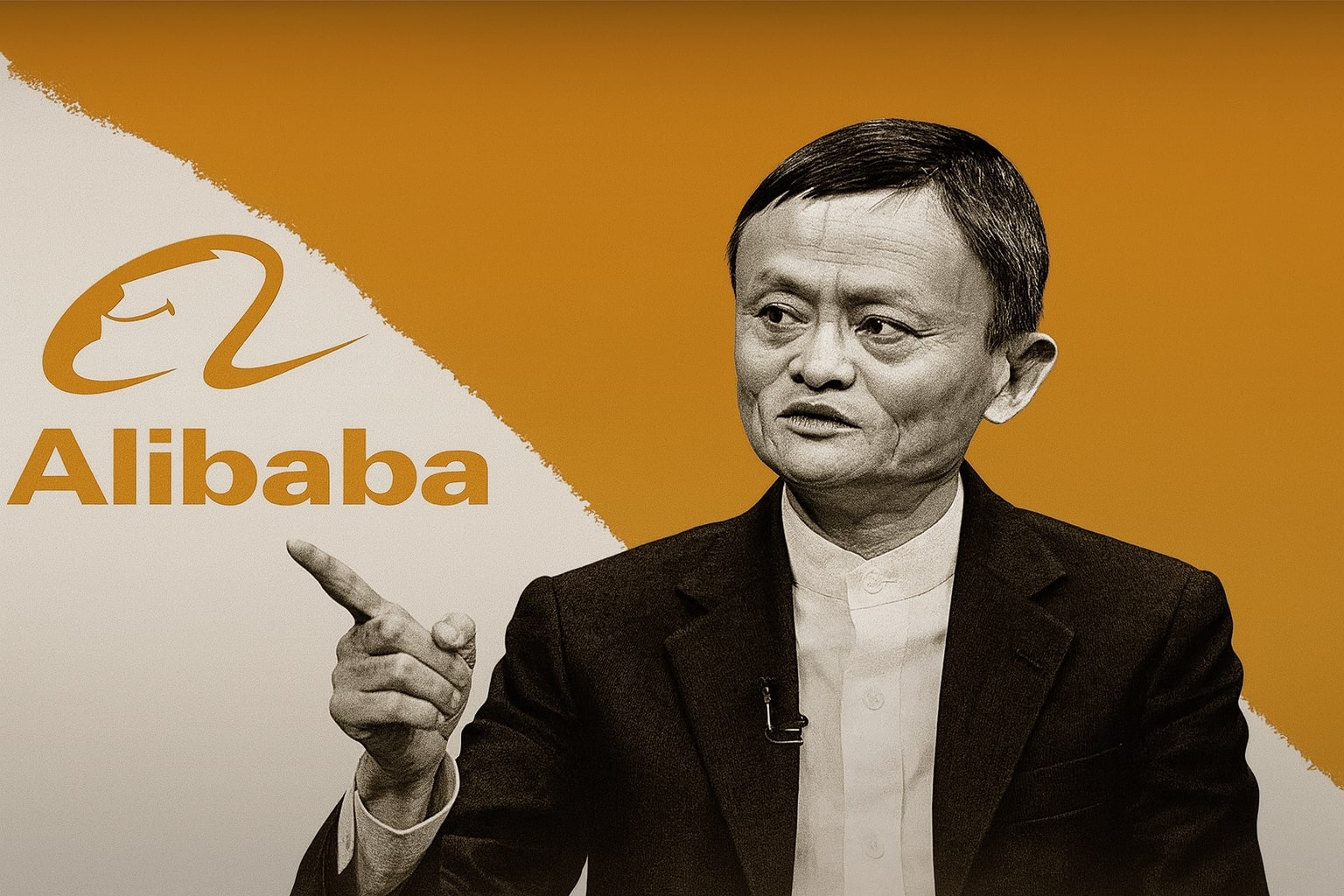
Alibaba stock trades near $154.91, down 2.49%, as the company pours $53B into AI infrastructure and data centers, fueling triple-digit AI revenue growth and 34.5% Cloud expansion. With Qwen3 models gaining traction and insiders accumulating shares, BABA’s re-rating toward $190–$200 looks increasingly justified.
NYSE:BABA Rebuilds For AI Dominance As Stock Consolidates Near $155
Alibaba’s Stock Metrics, Valuation, And Market Context
NYSE:BABA trades at $154.91, down $3.96 (-2.49%) on the day, within a $153.36–$155.30 intraday band. The company’s market capitalization stands at $369.25 billion, while its P/E ratio is 20.88, with a 0.68% dividend yield. Over the last 52 weeks, the stock has moved between $80.06 and $192.67, almost doubling from its yearly low but still 20% below its August 2025 peak. The average volume of 12.94 million shares reflects consistent institutional participation. Despite the correction, the valuation remains conservative relative to U.S. peers trading above 30x forward earnings, leaving NYSE:BABA undervalued compared to its structural AI growth story.
AI Spending Surge Impacts Earnings But Builds Long-Term Leverage
Alibaba’s second-quarter FY2026 results revealed the trade-off between heavy AI investment and short-term profit compression. Earnings dropped 72% year-over-year, largely from asset disposals and accelerated spending in AI infrastructure and quick commerce. Yet total revenue would have climbed 15% YoY if the Sun Art and Intime business divestitures were excluded. The company has committed approximately CNY380 billion ($53 billion) in AI CapEx over the next few years, with management signaling potential expansion beyond that figure. CapEx intensity jumped to 12.7% of revenue, up from 7.2% a year prior, as Alibaba channels resources into AI training, data centers, and model development. This cycle mirrors the early-stage CapEx phase once seen at AWS and Google Cloud—temporary margin pressure ahead of structural cash flow recovery.
AI And Cloud Revenue Explode As BABA Strengthens Its Leadership
Alibaba’s Cloud Intelligence Group revenue soared 34.5% YoY, accelerating from 9% last year, as enterprise adoption of generative AI tools gained momentum. AI-related revenue has expanded at triple digits for six consecutive quarters, making this the company’s fastest revenue cycle since 2020. The company’s AI ecosystem, powered by its Qwen models, now drives demand across sectors including retail, logistics, and finance. Its Qwen3 Max trillion-parameter model ranks competitively with Western systems in benchmark testing, while Qwen2 72B Instruct dominates domestic text comprehension and coding benchmarks. Over 90,000 enterprises have integrated Qwen-based tools, demonstrating Alibaba’s unmatched AI distribution within China’s digital economy.
Vertical Integration Shields Alibaba From Chip Export Constraints
As U.S. export restrictions limited access to Nvidia’s advanced GPUs, Alibaba’s strategic response has been swift. The company’s Hanguang 800 inference chip remains the fastest domestically produced AI processor, outperforming peers in image recognition throughput. Its proprietary Aegaeon pooling system allows virtual GPU allocation, reducing Nvidia chip dependence by over 80% and increasing compute efficiency by up to ninefold. These efficiencies enable NYSE:BABA to maintain AI momentum despite geopolitical constraints, providing resilience unmatched by regional competitors. The expansion of ex-China data centers ensures capacity continuity and reinforces Alibaba’s leading position in the Chinese AI cloud market, where it holds approximately 35–36% share.
E-Commerce Engine Reignites As Quick Commerce Surges 60% YoY
The integration of Taobao and Tmall under the Alibaba China E-Commerce Group has begun delivering results. The segment grew 16% YoY in Q2 FY2026, up from 10% in Q1, driven primarily by quick-commerce revenue jumping 60% YoY. Despite elevated spending, this acceleration shows Alibaba’s e-commerce moat remains intact. Excluding one-time disposals, consolidated revenue growth reached 15% YoY, compared to a reported 5% YoY headline. These results reaffirm that AI-driven personalization and logistics optimization are already translating into stronger consumer monetization, with profitability set to rebound once CapEx normalizes in FY2027.
Read More
-
SCHG ETF Near $33 High As AI Giants Drive 19% 2025 Rally
01.01.2026 · TradingNEWS ArchiveStocks
-
XRP-USD Stuck At $1.87 As XRPI Near $10.57 And XRPR Around $14.98 Despite $1.16B ETF Wave
01.01.2026 · TradingNEWS ArchiveCrypto
-
Natural Gas Price Forecast - NG=F Slides Toward Key $3.57 Support As Ng=F Extends 33% Drop
01.01.2026 · TradingNEWS ArchiveCommodities
-
USD/JPY Price Forecast - Yen Near 156 As Fed Cuts Meet Boj Hawkish Turn
01.01.2026 · TradingNEWS ArchiveForex
Valuation Still Lags Fundamental Recovery
At the current $155 level, NYSE:BABA trades at roughly 24x forward earnings, compared to its five-year average of 14x–15x and 10-year normalized level near 20.5x. The premium reflects CapEx-driven EPS compression rather than fundamental overvaluation. EV/sales multiples remain near 2.0x, below peers in the global AI and cloud sector, while projected free cash flow recovery from FY2027 supports an intrinsic valuation closer to $190–$200 per share. The People’s Bank of China’s prioritization of AI infrastructure investment provides macro-level tailwinds that underpin Alibaba’s expansion runway.
Investment Outlook And Rating
The setup for NYSE:BABA remains highly asymmetric. The company’s AI infrastructure revenue base is expanding 30–35% annually, while headline earnings are compressed by temporary investment cycles. The stock’s consolidation between $150 and $160 offers accumulation opportunity ahead of FY2027’s expected re-acceleration in earnings and margin expansion. With AI, cloud, and commerce integration progressing faster than market recognition, BABA’s fair value sits between $190 and $200 per share. Based on the data, the verdict is Buy – Bullish Bias, with structural upside exceeding +25% from current levels.