NYSE:BABA: H200 Shipments – 200,000 GPUs To Supercharge Qwen And Cloud AI
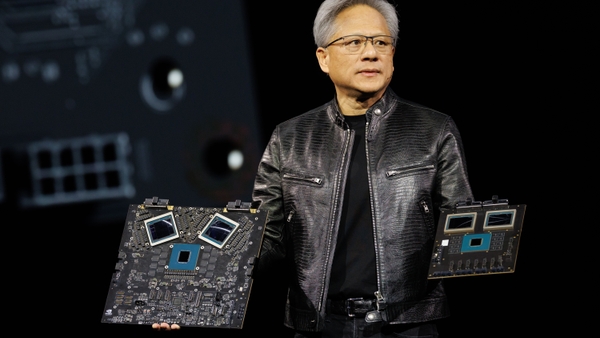
The clearance for H200 GPU shipments into China is the single most important near-term catalyst for NYSE:BABA. The company is reportedly preparing to import around 200,000 H200 AI-optimized GPUs. The performance gap matters: the prior H20 chip, designed to stay under U.S. export thresholds, delivered roughly 296 TFLOPS, while the H200 is quoted near 1,979 TFLOPS. That is about 6.7–7x more raw processing power per GPU. For Alibaba’s Qwen 2.5 models and broader AI Cloud workloads, that means training cycles that can be compressed dramatically, higher-resolution models, and faster iteration for enterprise offerings. In practical terms, the Cloud platform can host more complex agentic use-cases, serve more concurrent users at lower latency, and upgrade its entire AI catalog without needing to rewrite the software stack. The bottleneck over the past two years has not been demand but compute. With 200,000 H200s in the pipeline, that constraint begins to loosen in 2026, and the earnings power of Alibaba Cloud starts to look materially underpriced at $165.40.
NYSE:BABA: Qwen Upgrade And 100M+ MAUs Turn The Ecosystem Into One AI Interface
The Qwen upgrade is the second leg of the AI story for NYSE:BABA. The company is no longer treating Qwen as a standalone chatbot; it is wiring Qwen directly into the main consumer and merchant surfaces: Taobao, Taobao Instant Commerce, Alipay, Fliggy and Amap. That turns Alibaba’s front end into a unified AI interface where more than 100M monthly active users already touch the Qwen layer in some form. On Taobao and Taobao Instant Commerce, Qwen can personalize feeds, optimize search, tune prices and drive conversion at the SKU level. In Alipay, it can recommend financial products and automate customer service. On Fliggy, it can handle travel planning and dynamic pricing. In Amap, it can overlay location data on commerce. All of that runs back into Alibaba Cloud, which bills the compute. The Qwen upgrade is therefore not just an app event; it is a monetization flywheel in which every incremental AI interaction routes more volume across a cloud stack that is being upgraded with H200-class hardware.
NYSE:BABA: Applied AI, Embodied Hardware And China’s Strategic Tailwinds
China is explicitly targeting applied and embodied AI, not just model benchmarks. For NYSE:BABA, that aligns almost perfectly with its mix. The company sits at the junction of AI software (Qwen), AI infrastructure (Alibaba Cloud) and real-world commerce rails (Taobao, Alipay, logistics, instant delivery). The country’s AI hardware market is projected to grow at a high-teens CAGR through the decade, and Beijing has mandated that at least 50% of semiconductor manufacturing equipment for new capacity must be domestic. Alibaba’s RMB380B-scale AI and cloud CapEx budget is being deployed against that backdrop. Even if Chinese model quality still trails the absolute frontier in the U.S., what matters for earnings is whether Alibaba can deploy “good enough” models into daily consumer and enterprise workflows at scale. With over 100M Qwen MAUs already and an ecosystem that touches retail, payments, travel and navigation, the company is structurally positioned to be the main conduit for China’s applied AI ambitions.
NYSE:BABA: Valuation Re-Rating – From 16.7x Forward P/E To 22x Trailing
The market has started to pay for that optionality. When the first wave of cloud-and-GPU commentary hit, NYSE:BABA was trading around a 16.7x forward P/E, at roughly 65% of a major U.S. megacap peer with a similar e-commerce plus cloud structure. A fair value multiple of 20x was used then to derive a target near $188 per share, implying strong upside from levels well below $165. Today, the picture is more nuanced. A forward earnings multiple near the low-20s (the second analysis cited roughly 24x forward versus a 10-year average of ~20.4x) and a current trailing P/E of 22.01 at $165.40 show the discount has narrowed but not disappeared. The large-cap U.S. AI cohort still trades closer to 28x forward earnings, with the biggest e-commerce-plus-cloud peer around 32x. That leaves NYSE:BABA at a noticeable, though smaller, valuation gap despite Cloud growing 30% and AI becoming a larger share of the mix. Against a prior fair value estimate of $188, today’s price implies roughly 13–14% upside purely on rerating, with any positive surprise in cloud growth or Qwen monetization extending that gap.
NYSE:BABA: Stock Behavior – >100% 12-Month Gain But Uptrend Still Intact
Price behavior confirms that investors have already rotated back into NYSE:BABA aggressively. From a 52-week low of $83.03 to recent levels above $160, the stock has delivered a gain north of 100% within a year. The tape shows a repeating pattern: sharp pullbacks, basing, and subsequent rallies that break prior local highs. One of those bases formed around the mid-$140s; the stock then pushed back toward its early-November highs and is now consolidating in the mid-$160s after a $170.93 close just one session earlier. The 52-week high at $192.67 is a clear reference point. Trading between $163.50 and $169.85 in the last session indicates dip-buyers still step in quickly on weakness. For a name with 10.66M average daily volume, moves of 3–5% in a session are not outliers; volatility is the norm as the market reprices a still-controversial Chinese AI leader rather than a stable, slow-growth consumer staple.
NYSE:BABA: Structural And Policy Risks – GPUs, Regulation And Competition
The bullish AI and Cloud story for NYSE:BABA sits on top of non-trivial risk. Beijing’s current requirement that at least 50% of semiconductor equipment used for new capacity be domestic could tighten further, potentially forcing an even higher domestic content ratio. That would limit the runway for foreign GPU vendors and make reliance on H200-class imports less sustainable. If export rules in the U.S. are re-tightened or Chinese regulations move to favor only homegrown compute, Alibaba could face another round of GPU scarcity just when Qwen adoption scales. On top of that, the legacy overhang from the 2020 tech crackdown is not gone; it is merely priced somewhat more rationally. Any renewed policy shock in China’s platform economy would hit NYSE:BABA harder than smaller, less systemically important players. Competitive tension is also real. PDD and ByteDance are pushing hard into both commerce and AI engagement, while another large Chinese tech peer is attempting to list a chip unit and deepen its in-house semiconductor capabilities. If Alibaba’s Cloud growth slows below the recent 30% run-rate while rivals accelerate, the multiple around 22x trailing earnings will not hold.
NYSE:BABA: Insider And Governance Watchpoints For A Re-Rated Name
For a stock that has more than doubled from its $83.03 low, governance and insider behavior matter. While the public data cited here focused on AI, cloud and GPUs rather than specific insider trades, investors tracking NYSE:BABA should be watching whether major executives and directors lean into the story with open-market buying or systematically sell into strength. Those patterns can be monitored via the TradingNews.com stock profile pages, including the detailed insider transaction feed at https://www.tradingnews.com/Stocks/BABA/stock_profile/insider_transactions and the broader overview at https://www.tradingnews.com/Stocks/BABA/stock_profile. A sustained sequence of insider accumulation near or below current levels would reinforce the AI-driven re-rating thesis; heavy selling into rallies toward the $190–$200 region would send the opposite signal.
NYSE:BABA: Risk-Reward At $165.40 – Final View: Buy With AI-Cloud Upside And Policy Hair
Pulling everything together, NYSE:BABA at $165.40 is no longer the deeply distressed, single-digit P/E name it was when Chinese tech was uninvestable for many global funds. The stock now trades on a 22.01x trailing multiple, offers a small 0.63% dividend, and sits roughly 13–14% below a previously justified fair value zone around $188, with the possibility of further upside if Cloud and Qwen execution meets the more aggressive projections. On the positive side of the ledger, you have 30% Cloud growth, 2.5x faster expansion than commerce, a planned intake of 200,000 H200 GPUs delivering 6.7–7x performance gains over the H20 generation, Qwen integrated across Taobao, Alipay, Fliggy and Amap with 100M+ MAUs, and a plausible path for Alibaba Cloud to move from about 40% to near 60% domestic market share while capturing up to 80% of incremental cloud revenue growth in 2026. On the negative side, you have persistent regulatory and geopolitical risk, a domestic semiconductor policy that could tighten beyond the current 50% threshold, fierce competition from PDD, ByteDance and other AI players, and the reality that the stock has already more than doubled from $83.03 to the mid-$160s and printed a 52-week high at $192.67. Based strictly on the data above, the balance still tilts bullish. At current prices, NYSE:BABA is not “cheap at any price,” but it remains undervalued relative to its AI and Cloud earnings power and still trades at a discount to comparable global megacap cloud-plus-commerce platforms. The correct call here is Buy, with the understanding that the thesis lives and dies on Alibaba Cloud sustaining high-20s to 30% growth and Qwen-driven monetization actually flowing through to EPS over the next 12–24 months despite policy noise.