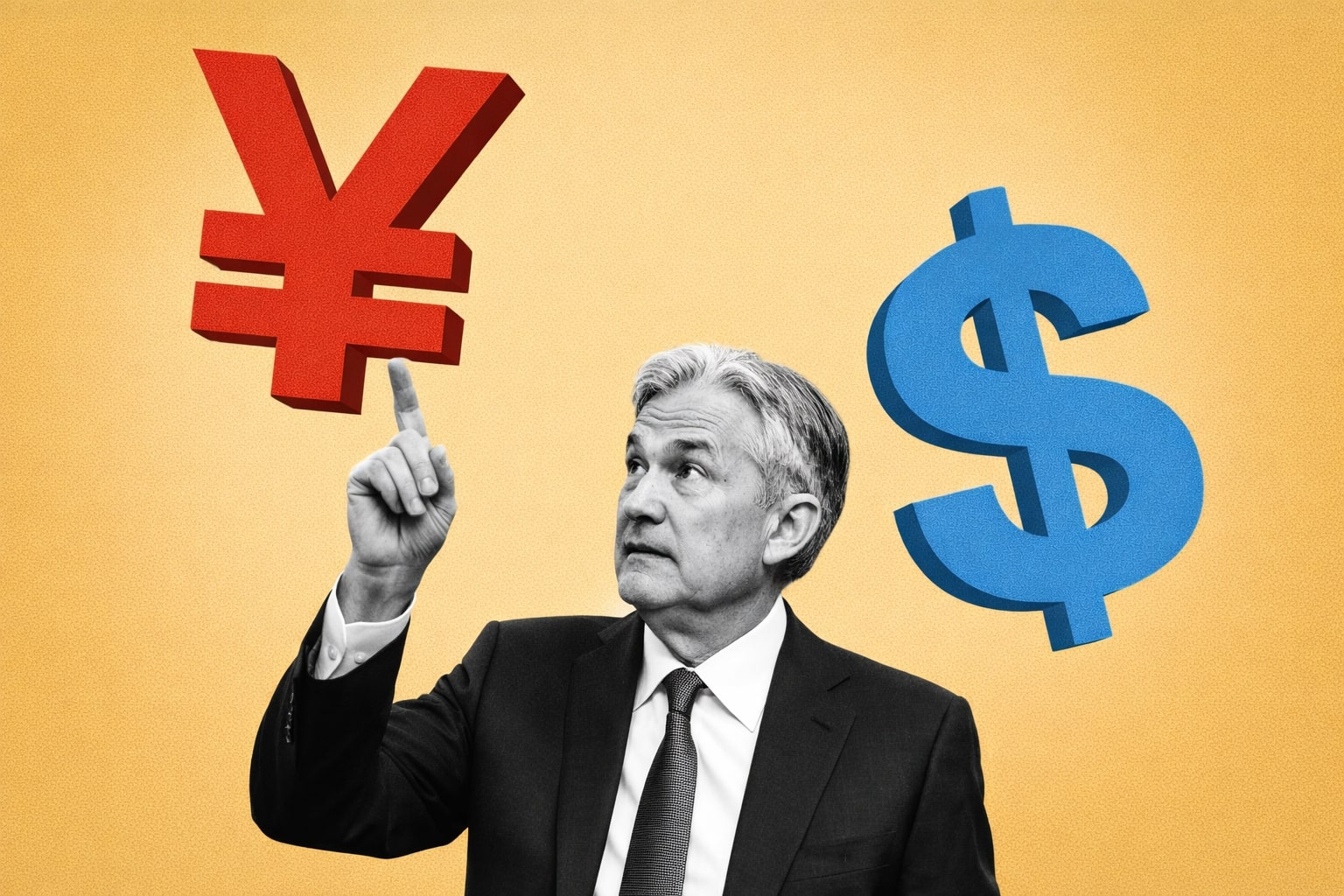
GBP/USD: Fed Shock Knocks DXY Under 99 While Sterling Grinds Back Toward 1.35
Spot GBP/USD reclaims the mid-1.34s after defending the 200-day band
GBP/USD is trading around 1.3470–1.3485, up roughly 0.5–0.6% on the day, after bouncing hard from a near three-week low just above 1.3400. The pair has pivoted directly on the 200-day moving average cluster at 1.3380–1.3400 and pushed back into the mid-1.34s, reversing a four-session losing streak. That bounce is not random: the 1.3380–1.3400 zone remains the primary structural floor for GBP/USD, with a clean break below it opening air down to roughly 1.3200. Instead, buyers stepped in exactly where they had to, turning a breakdown attempt into a squeeze higher.
Fed independence shock drives the latest USD sell-off, not weak macro alone
The current leg higher in GBP/USD is driven by USD damage from the Fed independence story, not by UK outperformance. The Dollar Index has fallen from above 104.50 late last week to under 99.00, with DXY quoted around 98.8 as “Sell America” flows come back into G10 FX. The trigger is Jerome Powell’s own statement that the Federal Reserve received grand jury subpoenas from the Department of Justice threatening a criminal indictment if the bank continues to set rates strictly on economic criteria rather than presidential preference. Markets know what this means: the US central bank is under direct political fire. Earlier, when the focus was purely macro, the dollar stayed strong even on softer numbers. Nonfarm payrolls delivered just 50,000 jobs versus a 65,000 consensus, with unemployment at 4.4%, yet USD strengthened on the day and GBP/USD still struggled. Only when institutional risk hit – the Fed probe and public pressure – did the dollar crack across the board and give GBP/USD room to run.
UK macro still caps GBP: 2.8% inflation, 0.1% GDP and looming BoE cuts
On the British side, fundamentals are not “bull market” material; they are simply good enough to keep the pound investable while the US creates its own problems. Latest figures from late 2025 show UK CPI cooling to about 2.8%, with quarterly GDP barely positive at 0.1%. That combination – inflation close to target and stagnating growth – is exactly why the market is pricing at least two Bank of England cuts in 2026. November’s budget from Chancellor Rachel Reeves helped reduce fiscal and political risk, which shaved some risk premium out of GBP, but it did not change the underlying reality: this is still a low-growth, moderate-inflation economy. You do not buy GBP because the macro is spectacular; you buy it when the other side of the pair is shooting itself in the foot. Those BoE cut expectations are the ceiling that stops GBP/USD from turning a relief rally into a clean trend. As long as the UK is priced for easing while the Fed is only tentatively shifting toward lower rates, every spike into the high-1.35s will meet sellers.
Technical map on GBP/USD: 1.3380–1.3400 as the floor, 1.3567–1.3600 as the lid
Even with the news shock around the Fed, GBP/USD price action is still a range trade. The lower band is anchored by the 200-day moving average, currently around 1.3380–1.3400, which just cushioned the latest drop. A decisive daily close below that band opens the door back toward 1.3200, the next obvious demand zone flagged in earlier sell-offs. On the upside, the market has been orbiting the 1.3500–1.3550 pocket for months. The 50-day moving average is clustered near 1.3400, but the real battle zone is 1.3500 as the psychological line and 1.3550–1.3567 as the recent yearly high. Every approach into that strip has faded. Broadly, GBP/USD has spent roughly seven months chopping between 1.32 at the bottom and about 1.36 at the top, with several impulsive rallies and sharp reversals but no sustained directional break. Right now, the pair is simply moving from the lower half of that corridor (1.32–1.34) back into the upper half (1.34–1.36), with 1.3380–1.3400 acting as the pivot.
Momentum and positioning: GBP/USD rebound is strong, but not an overbought blow-off
Momentum indicators back the idea of an aggressive recovery inside a range, not a new secular bull trend. The daily RSI has bounced back into bullish territory but is far from any overbought extreme, which fits a “reclaim the mid-range” move rather than the start of a vertical leg. Monday’s push to around 1.3485 marks a three-day high but still sits below the key 1.3500 pivot. That structure is typical of a market where shorts are covering into bad USD headlines, while medium-term sellers are waiting closer to the established resistance band. Previous commentary around GBP/USD already pointed to the 1.35 area as a likely swing high because the dollar managed to firm even on weaker US jobs data, signalling underlying demand for USD. The Fed scandal temporarily overrode that demand; it did not erase it. That is why this rally feels like a sharp repricing, not an all-clear breakout.
Cross-checks from EUR/USD and EUR/GBP confirm a targeted USD flush, not broad GBP euphoria
The rest of the FX complex tells the same story. EUR/USD is up roughly 0.4–0.5%, moving back toward the 1.17–1.18 belt and pressing against its own 50-day moving average. The 1.18 handle is a magnet and a resistance cluster; if the euro finally pushes through and holds above 1.18, that would confirm a broader USD down-leg that would normally drag GBP/USD toward and possibly through 1.3550–1.3600. At the same time, EUR/GBP still cannot build a sustained advance. Each attempt by the euro to grind higher against the pound runs into sellers, and the 200-day moving average on that cross is functioning as a pivot. Below it, the key structural level remains 0.8600; a breakdown there would cement sterling as the preferred European currency despite the UK’s own growth problems. Weekly performance data back that view: GBP is up about 0.57% versus USD and 0.16% versus EUR, which is exactly what you would expect in an environment where reduced UK fiscal noise meets a damaged dollar. That is not a universal “buy anything British” story; it is a targeted long-GBP-against-USD (and, to a lesser extent, EUR) trade.
Synthesizing the tape: GBP/USD is a tactical Buy inside a 1.32–1.36 range, with clearly defined risk
Put all the pieces together and the picture is straightforward. On the downside, 1.3380–1.3400 is the critical support where the 200-day band, recent lows and buyer interest all converge. Below that, 1.3200 is the obvious next stop. On the upside, 1.3500 is the first meaningful barrier, followed by the recent high at 1.3567 and the psychological 1.3600 figure. Fundamentally, the impulse is clearly dollar-driven: DXY sliding to 98.79 on Fed independence fears, Powell openly describing grand jury subpoenas, and a political overhang that did not exist just weeks ago. UK data – 2.8% inflation and 0.1% quarterly GDP with two BoE cuts priced for 2026 – act as a cap rather than a catalyst. The result is a range with a bullish tilt as long as the Fed story dominates headlines. In practical terms, that means treating dips toward 1.3400 as opportunities to position for a move back into 1.3550–1.3600, with the invalidation line just below 1.3380. With those levels and that backdrop, the stance is clear: GBP/USD is a Buy on weakness within a 1.32–1.36 range, bullish while 1.3380–1.3400 holds and upside likely capped near 1.3600 unless the Fed crisis escalates further.
That's TradingNEWS