GBP/USD Weekly Outlook: Fed Cut, BoE Risk And The 1.3400 Line
Fed Cut Drives GBP/USD Above 1.3400 Before Late-Week Pullback
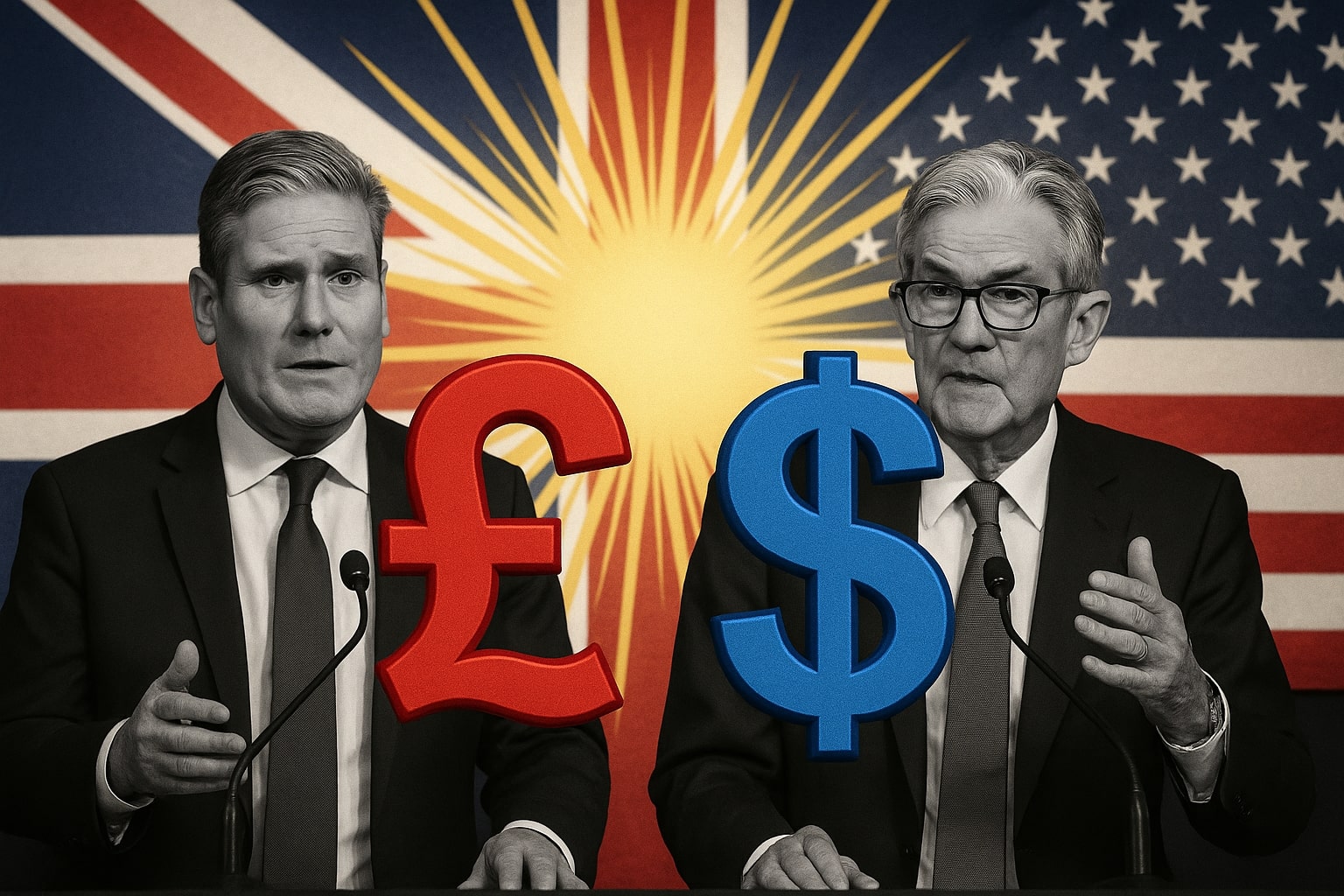
GBP/USD traded this week in a clearly positive band, pushing up to multi-week highs in the 1.3430–1.3438 region before slipping back toward roughly 1.3360 into the close. The advance was driven by the latest 25 bps Fed rate cut and guidance pointing to further easing in 2026, which hit the USD and allowed the pound to break decisively through the 1.3400 handle. Even after a 70–80 pip retracement from the top, the pair is still holding most of the upside built over the last three weeks.
Rate Differentials: Why GBP Still Has An Edge Over USD
The current structure in GBP/USD is anchored in expectations that the Fed will have to ease more aggressively than the BoE through 2026. After this week’s cut, markets are positioned for additional Fed reductions, while the BoE is only now approaching its first move lower. That relative path has favored the pound and helped force the break above 1.3400. At the same time, worsening UK growth means the UK side of the spread is deteriorating, which is exactly why price stalled near 1.3430–1.3438 instead of trending cleanly toward higher levels.
UK Macro Backdrop: Two Straight -0.1% GDP Prints Pressure GBP
October UK GDP came in at -0.1% month-on-month versus expectations of +0.1%, after a prior -0.1% contraction. Two consecutive negative prints confirm a stalling domestic economy. The weak data has pushed market-implied odds of a December BoE rate cut up to around 90% for a 25 bps move. A central bank easing into negative growth normally weighs on GBP, which is why the pound dipped immediately after the release, even though the broader uptrend in GBP/USD remained intact thanks to dollar weakness.
US Labor And Fed: Jobless Claims Jump 44K And Undercut The Dollar
On the U.S. side, Jobless Claims rose by roughly 44,000 in the latest weekly print, reinforcing the “cooling labor market” narrative. Combined with the third straight 25 bps Fed cut, that soft data strengthened expectations for a more aggressive easing path in 2026. The result was renewed dollar selling and a decisive push in GBP/USD to about 1.3417 at one point, putting the pair above 1.3400 and at its highest level in roughly six weeks before profit-taking set in.
Event Risk Cluster: BoE Meeting, UK Data, US NFP And CPI
The next move in GBP/USD will be dictated by a dense data and policy calendar. For the UK, PMI releases, Average Earnings, and unemployment figures will shape how far the BoE feels it can go on cuts beyond December. Softer PMIs and weaker wage growth would reinforce recession worries and add downside pressure to the pound. For the US, Nonfarm Payrolls, the unemployment rate, CPI, Retail Sales, and PMIs will drive the USD leg. Strong NFP or sticky inflation would support a broader dollar rebound; weaker numbers would revive selling pressure on the greenback and partially offset the impact of a BoE cut on GBP.
Trend Structure: GBP/USD Still In A Clear Uptrend Above 1.3350
On the daily chart, GBP/USD remains in a defined uptrend. Price is supported by the confluence of the 100-day and 200-day moving averages sitting around 1.3350. The latest candle near the highs is a doji, signaling hesitation and profit-taking as the market tested the 1.3430–1.3438 band. That pattern warns of near-term consolidation or a corrective pullback, but as long as closes remain above 1.3350, the underlying bullish structure is intact rather than reversed.
Momentum Profile: RSI Near 60 Keeps The Bullish Door Open
Daily RSI hovering near 60 shows that GBP/USD is trending higher without being stretched. The market is not yet overbought, which means the pair still has room to push higher if upcoming macro releases do not flip the narrative. Rising price, firm support at the key moving averages, and mid-range momentum together describe a “buy dips while the trend holds” setup rather than an exhaustion top.
Overhead Hurdles: 1.3400–1.3438 As The First Barrier, Then 1.3470
On the topside, resistance is tightly defined. The psychological 1.3400 level is the initial barrier that has repeatedly capped intraday rallies. Just above it sits the recent spike zone of roughly 1.3430–1.3438, which marks this week’s high. A sustained daily close above that band would confirm that buyers have absorbed the profit-taking flows and open the path toward 1.3470. That 1.3470 region is the next logical upside objective if the BoE’s tone is not aggressively dovish and if US data fail to trigger a broad USD short squeeze.
Support Ladder: 1.3350, 1.3280 And 1.3200 As Critical Floors
On the downside, the first and most important support level is the 1.3350 area, where the 100- and 200-day moving averages cluster. As long as GBP/USD remains above 1.3350 on a daily closing basis, the bulls control the tape. A decisive break below 1.3350 exposes the next demand pocket around 1.3280, which has acted as a recent accumulation zone. If 1.3280 fails, focus shifts to the 1.3200 area, where the 20- and 50-day moving averages come into play. A sustained drop below 1.3200 would effectively end the current upswing and signal a deeper corrective leg.
Dollar Dynamics: USD Trying To Stabilize After Cut-Driven Selloff
After the third consecutive 25 bps Fed cut, the USD sold off sharply but has started to show signs of stabilization late in the week. For GBP/USD, that means two-sided risk around current levels. Any meaningful rebound in the dollar will reinforce resistance around 1.3400–1.3438 and may drive the pair back toward 1.3350 or even 1.3280. Conversely, if the next round of US data pushes yields lower and revives Fed-cut speculation, the pound can use that as fuel to finally clear the 1.3438 zone and attack 1.3470.
Market Positioning: Elevated GBP, But Longs Turning More Tactical
Positioning over the last three weeks shows GBP/USD traders balancing between stretched gains and still-bullish structure. With three consecutive weekly advances and spot trading near 1.3400, new longs are increasingly cautious given the -0.1% / -0.1% back-to-back UK GDP prints and the almost fully priced 25 bps BoE cut. Dip-buyers remain active above 1.3350, but they are far more selective above 1.3430, waiting for a clean catalyst. At the same time, short-term sellers are using each push toward 1.3400–1.3438 to fade strength, betting that weak UK growth plus a stabilizing USD will cap further upside.
Medium-Term Picture: Growth Risk Versus Rate Advantage In GBP/USD
Looking beyond the immediate week, the medium-term narrative for GBP/USD is a standoff between relative interest rates and relative growth. The Fed’s path implies several cuts through 2026, while the BoE is only now moving toward its first cut, which in theory supports GBP. But the UK economy is already showing two consecutive -0.1% GDP months and is flirting with stagnation. If UK data continue to disappoint, the market will start to price a faster BoE easing cycle, eroding the pound’s yield advantage even if the Fed cuts more in absolute terms, and that would cap or reverse the current advance.
Trading Framework And Bias For GBP/USD Around 1.3400
Into the coming week’s BoE decision and key data releases, GBP/USD is likely to oscillate between the 1.3350 support and the 1.3438 resistance, with 1.3400 acting as a central pivot. A controlled BoE cut, neutral-to-cautious tone, and soft but not catastrophic US prints would favor another test and potential break of 1.3438, with 1.3470 the next technical target. A sharper UK downside surprise or a strong US NFP/CPI combination would tilt the balance toward a retreat back to 1.3350 and possibly into the 1.3280 zone, putting the three-week uptrend under pressure.
Final View On GBP/USD: Bias Buy, Bullish Above 1.3350
Taking into account current pricing around 1.3360–1.3400, the three-week series of higher weekly closes, key support at 1.3350, upside markers at 1.3438 and 1.3470, the Fed’s ongoing easing cycle, and the BoE’s imminent but largely discounted 25 bps cut, the stance on GBP/USD is Buy with a bullish bias while spot holds above 1.3350, with a clear line in the sand near 1.3200 where that bias flips to neutral or bearish if broken.
That's TradingNEWS