
Oracle Stock Price Forecast - ORCL Near $200: Is a $523B AI Backlog Still Mispriced?
NYSE:ORCL closed at $198.52 after a 4.7% spike, backed by 34% cloud growth, Stargate AI infrastructure and massive RPO while Michael Burry bets against its debt-loaded AI push | That's TradingNEWS
NYSE:ORCL at $198.52 – AI Infrastructure Heavyweight With $523B Backlog and Leverage Risk
Current Tape, Trading Range and Core Metrics for NYSE:ORCL
NYSE:ORCL closed at $198.52, up 4.95% on the day, after trading between $188.78 and $200.18. The 52-week range stretches from $118.86 on the low side to $345.72 on the high, so the stock is still about 40% below its peak despite the recent rebound. Market value stands around $570.37B. The trailing P/E prints near 37.30 while the forward multiple is roughly in the mid-20s. Dividend yield at this price is about 1.01%, based on a $0.50 quarterly payout. Average daily volume is above 28M shares, which means liquidity is not an issue when positioning around the AI story.
Cloud, OCI and AI Workloads as the Growth Engine Behind NYSE:ORCL
The old database-only narrative is dead. Last quarter revenue reached $16.06B, up 14.22% year on year and marking a third consecutive acceleration in top-line growth. Net income hit $6.14B, rising 94.7% year on year, helped by $2.67B in non-operating income, while reported net margin moved to roughly 38.21%. Cloud revenue climbed to about $8.0B, growing 34% year on year. Within that, Oracle Cloud Infrastructure, the core AI infrastructure unit, delivered around $4.1B and grew in the 66–68% band year on year. GPU-linked cloud revenue grew roughly 177%, highlighting how aggressively AI training and inference workloads are shifting onto OCI. With cloud now representing about half of total revenue and OCI driving the acceleration, NYSE:ORCL trades much more like an AI infra name than a legacy software vendor.
The $523 Billion RPO Wall and the Forward Revenue Pipeline for NYSE:ORCL
The defining number for the equity story is the $523B backlog of remaining performance obligations. That figure is up roughly 433–438% in a single year, after Oracle signed about $68B of new contracts in one quarter, including multi-year capacity deals with large AI clients such as Meta and Nvidia. Cloud now carries the bulk of that backlog, and management’s long-range plan for OCI assumes a 75% five-year revenue CAGR, with OCI revenue targeted at $166B by FY2030 versus a prior goal of $144B. This is not a marginal line item; it is a multi-hundred-billion pipeline that, if executed, locks Oracle into the infrastructure spine of the AI buildout. The equity market is discounting that future cash flow at a level that implies real execution and funding risk, but the contracted revenue itself is not theoretical.
Data Centers, Power Constraints and the Stargate AI Buildout Around NYSE:ORCL
Oracle is not only stacking GPUs; it is racing to add power and capacity at a scale that most software names never touch. OCI already runs about 147 live cloud regions, with 64 more under construction around the world. The company handed over roughly 400 megawatts of new data-center capacity to customers in a single quarter and increased GPU capacity by about 50% in that same window. A Texas AI supercluster is being equipped with more than 96,000 Nvidia Grace Hopper chips, and AMD MI300 accelerators are being deployed alongside them to diversify supply. The Stargate project magnifies this. OpenAI and SoftBank each committing roughly $500M into SB Energy for data-center and power buildout directly addresses the biggest bottleneck in AI: energy and grid capacity, not just chips. Oracle is positioned as a key infrastructure partner in that ecosystem, so every step that de-risks Stargate’s power and funding indirectly supports the visibility of Oracle’s $523B backlog and validates the current level of AI infra capex.
Multi-Cloud Strategy, Enterprise Base and Competitive Position of NYSE:ORCL
The differentiation is not only in hardware density. Oracle has turned its huge base of database and enterprise application customers into a captive demand engine for cloud. Cloud and SaaS applications are growing in the low-to-mid teens and provide a stable layer under the higher-beta OCI business. Oracle’s multi-cloud strategy matters: its database services can run on other clouds such as AWS and Azure while Oracle continues to manage them, and that multi-cloud database segment recently grew around 817%. The company offers a full stack of infrastructure and applications, allowing customers to run databases, ERP, HCM, CX and AI workloads on Oracle’s cloud with tight integration and security. That positioning is why several major banks describe NYSE:ORCL as a top offensive play in AI infrastructure even after a painful selloff.
Income Statement Trends, Margins and Earnings Quality at NYSE:ORCL
On the income statement, the growth is visible but not costless. Operating expenses rose in absolute terms and ticked up from 70% to 71% of revenue year on year, mainly due to cloud and software costs tied to the expansion. GAAP operating margin slipped from 30% to about 29%, while on an adjusted basis it eased from 43% to around 42%. Profitability is still strong for a company deploying heavy capex, but margin expansion is not the near-term driver; top-line acceleration is. Diluted GAAP EPS jumped 91%, and adjusted EPS climbed about 54%, but a significant portion of the bottom-line surge came from non-operating income of $2.668B, so operating margin is the cleaner gauge of underlying performance. The pattern is straightforward: Oracle is deliberately sacrificing some near-term efficiency to secure AI infra scale.
Read More
-
QQQ ETF At $626: AI-Heavy Nasdaq-100 Faces CPI And Yield Shock Test
11.01.2026 · TradingNEWS ArchiveStocks
-
Bitcoin ETF Flows Flip Red: $681M Weekly Outflows as BTC-USD Stalls Near $90K
11.01.2026 · TradingNEWS ArchiveCrypto
-
Natural Gas Price Forecast - NG=F Near $3.33: NG=F Sinks as Supply Surges and China Cools LNG Demand
11.01.2026 · TradingNEWS ArchiveCommodities
-
USD/JPY Price Forecast - Dollar Breaks Toward ¥158 as Yen Outflows and US Data Fuel Dollar Charge
11.01.2026 · TradingNEWS ArchiveForex
Balance Sheet Leverage, Cash Flows and Credit Signals for NYSE:ORCL
The real Achilles heel for NYSE:ORCL is leverage. Total assets stand near $204.98B, up about 38.05% year on year. Total liabilities are roughly $174.53B, up 30%, which implies a debt-to-assets ratio around 64%. That is high for a technology name and makes the company dependent on stable credit markets. Cash and short-term investments of $19.77B are up more than 74% year on year, giving some buffer, but free cash flow is currently negative. Cash from operations reached about $2.07B, up 58.44%, while cash outflows from investing were roughly –$7.71B and cash inflows from financing jumped to around $14.49B, a 393% increase. Net change in cash was about $8.80B, driven by new funding, while free cash flow printed around –$8.51B, reflecting the capex wave. Credit-default swaps on Oracle debt have traded at the highest levels since 2008, and a planned $10B data-center financing in Michigan fell through when a key lender backed away. That combination tells you lenders will demand higher coupons, tighter terms, or both going forward, so the balance between backlog conversion and funding cost is central for equity holders.
Board Rotation, Governance and Strategy Oversight at NYSE:ORCL
Governance has not stood still while the capital intensity ramped up. Two long-tenured directors, with roughly 18 and 20 years on the board, retired recently, and Oracle emphasized that neither departure was driven by a dispute or disagreement. For a company that is effectively betting its balance sheet on AI infrastructure, this type of board refresh is logical. The next stage of growth requires directors who can evaluate multi-billion-dollar power and data-center projects, debt structure and counterparty risk with precision. Investors in NYSE:ORCL should read these governance moves not as a crisis signal but as a shift toward a board tuned to the realities of an AI infra buildout.
Insider Behavior and Where to Track It for NYSE:ORCL
Insider activity has been noticeable but not yet alarming. A recent sale around $2.95M by an insider came at a time when the stock was rebounding toward $190–$200. For a company of this scale, that size is not thesis-changing, but persistent selling would be. To monitor the pattern properly, the right reference point is the dedicated insider feed on TradingNews. The page at https://www.tradingnews.com/Stocks/ORCL/stock_profile/insider_transactions aggregates transactions, while the broader snapshot at https://www.tradingnews.com/Stocks/ORCL/stock_profile shows who holds what. At this stage, insider activity should be seen as background noise against a much larger macro and capex story, but it becomes more important if multiple senior executives start exiting stock while AI capex climbs.
Michael Burry’s Short, Concentration Risk and the Bear Case in NYSE:ORCL
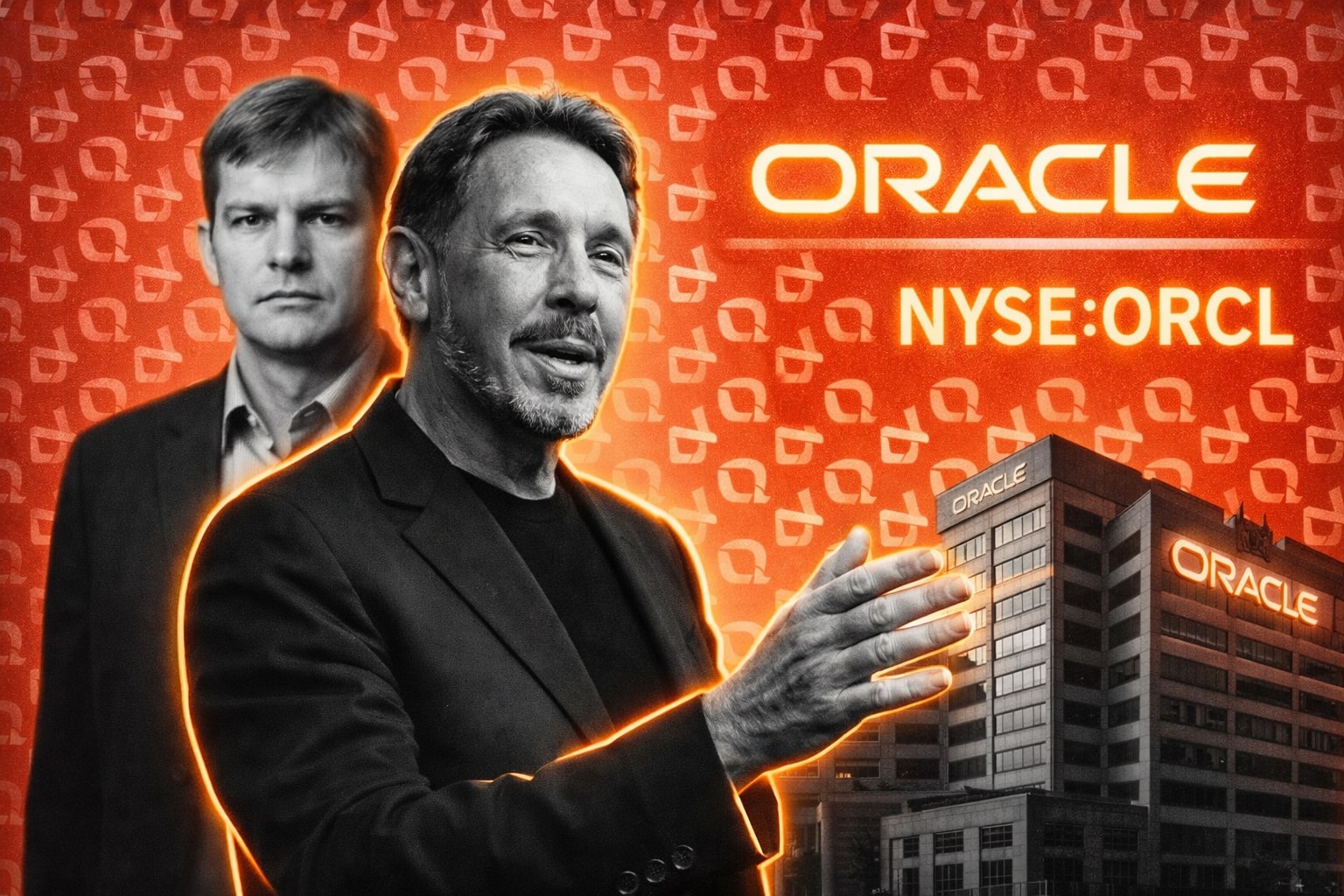
The most aggressive public bear is Michael Burry, who has reportedly taken a short position in NYSE:ORCL through put options and direct shorting. His argument focuses on the aggressive cloud expansion, the high debt burden and the possibility that management is overbuilding capacity due to ego, not disciplined return thresholds. One research shop highlighted that nearly all the increase in RPO around the September quarter came from one client, widely understood to be OpenAI, which makes the $523B backlog more concentrated than the headline suggests. Traditional software lines are showing mild softness, so a large slice of the growth depends on AI and cloud rather than broad-based legacy strength. Bears argue that if AI spending normalizes, deals are repriced or pushed out, and funding costs stay elevated, then a forward P/E in the mid-20s is still too high and the stock should trade closer to teens on earnings. That bear case is coherent and rooted in numbers, not sentiment, and investors in NYSE:ORCL must accept that risk.
Dividend Profile and Capital Returns Versus Capex Needs at NYSE:ORCL
At $198.52, the $0.50 quarterly dividend equates to $2.00 a year, or about a 1.01% yield. With GAAP EPS at $2.26 for the last reported quarter, earnings coverage is comfortable, and the company continues to return cash alongside its growth push. The real trade-off is not coverage; it is whether the board prioritizes deleveraging and capex over higher payouts or buybacks. Cutting the dividend would undermine the image of Oracle as a stable megacap, so management is likely to maintain or slowly grow the payout while using debt and operating cash flows to fund the buildout. For income-focused investors, NYSE:ORCL is not a yield vehicle; the dividend is a small additive element on top of a re-rating and growth story.
Trading Context, Volatility and the $200 Pivot for NYSE:ORCL
From a market structure angle, NYSE:ORCL around $198–$200 sits at an important psychological and technical zone. The stock has rallied sharply from around the high $180s and is still far below the $345.72 high, meaning a large part of the market is underwater. A clear break and hold above $200 would likely attract momentum and AI-theme flows, especially with the S&P 500 currently at 6,966 and risk appetite still strong. Volatility will stay elevated into the next earnings release, currently guided for mid-March 2026. That report will show whether OCI can sustain growth in the mid-60% range, whether AI infra consumption run-rate continues to expand at triple-digit percentages, and whether revenue recognition begins to eat meaningfully into the $523B backlog. Short interest remains low at about 1%, so this is not a classic squeeze setup; moves will be driven by revisions to revenue and earnings trajectories, not by forced covering.
Risk Matrix for Holders of NYSE:ORCL Equity
The key risks for equity holders cluster in five areas. First, AI demand normalization: if enterprises and AI labs pull back on training and inference spending, OCI growth can slow sharply from the current 66–68% levels. Second, client concentration: a large piece of the RPO surge is tied to a small group of mega-clients, making the backlog exposed to their funding, regulatory and strategic outcomes. Third, financing conditions: with debt-to-assets around 64% and CDS near post-2008 highs, any further deterioration in credit spreads will push the cost of capital higher and pressure equity valuation. Fourth, competitive response: AWS, Azure and Google Cloud have the scale to cut price or bundle aggressively, and while Oracle’s enterprise niche is strong, it is not immune to pricing pressure. Fifth, political and regulatory risk: TikTok, OpenAI and large data-center projects are magnets for political scrutiny, and policy shocks can spill over into Oracle’s infra contracts. None of these risks are hypothetical, which is why the stock trades at a discount to what its growth profile alone would justify.
Final View on NYSE:ORCL – High-Risk, AI-Levered BUY With Re-Rating Potential
Putting the numbers together, NYSE:ORCL at $198.52 offers a rare combination: cloud revenue growing 34% year on year, OCI expanding around 66–68%, AI infrastructure consumption run-rate up about 117%, and a $523B contracted backlog that has jumped more than 430% in a year. At the same time, the forward P/E sits in the mid-20s, the PEG is about 1.18x versus a sector median of 1.71x, and the average target price near $291 implies roughly 47% upside, with some bullish scenarios pointing to $320–$400 if management hits the OCI roadmap and converts backlog into revenue and cash. Against that, you have a 64% debt-to-assets ratio, negative free cash flow due to heavy capex, stressed CDS levels and a concentrated AI customer base that could slow or renegotiate. The balance of evidence still favors the upside. On the data presented, NYSE:ORCL is a BUY for investors who are comfortable with AI-infrastructure risk, leverage and volatility and who are targeting a three-to-five-year horizon rather than trading quarterly noise.