

QQQ ETF At $626: AI-Heavy Nasdaq-100 Faces CPI And Yield Shock Test
NASDAQ:QQQ hovers near record highs in a $402–$637 range while AI mega-caps, hotter-swap CPI odds, rising 10-year yields and looming March Fed cuts shape the next big move | That's TradingNEWS
NASDAQ:QQQ – Tech-Heavy Engine At All-Time Highs Around $626
Structure Of NASDAQ:QQQ – Concentrated AI And Growth Powerhouse
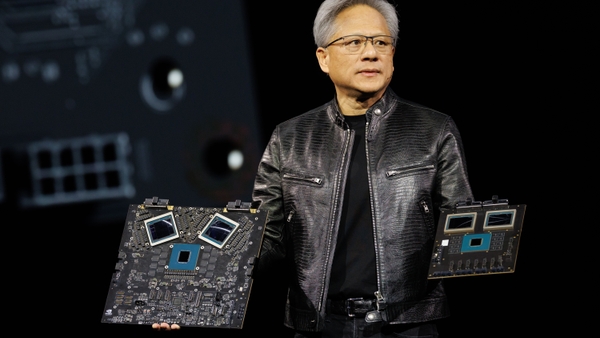
NASDAQ:QQQ tracks the Nasdaq-100, and at roughly $626–$627 it is sitting just under its record zone with a 52-week range of about $402–$637 and a market cap near $245 billion. The ETF is extremely top-heavy: the ten largest holdings control a bit more than half of the fund. Nvidia, Apple, Microsoft, Alphabet, Amazon, Tesla, Meta Platforms, Broadcom, Palantir, and Netflix together drive roughly 52% of performance. Each of these names is tied directly to secular growth themes: artificial intelligence, cloud infrastructure, robotics and autonomous systems, semiconductors, digital advertising, e-commerce, and streaming. Over the last five years those ten positions have delivered an average total return in the mid-300% area, which explains why the Nasdaq-100 and NASDAQ:QQQ have materially outpaced broader benchmarks over the same period. On top of that, second-tier chip leaders like Advanced Micro Devices and Micron have exploded higher over the last year (roughly +77% and +239% respectively), reinforcing how leveraged the index is to the AI hardware cycle. While NASDAQ:QQQ is classified as a diversified ETF, in practice you are buying a leveraged view on large-cap U.S. tech and communication-services profit pools with a small ballast from defensive names like Costco, PepsiCo, or Starbucks that slightly temper volatility but cannot dominate index behavior.
Macro And CPI Backdrop For NASDAQ:QQQ – Hot Data Risk Versus Fed Easing Path
Current macro conditions are a tug-of-war between hotter-than-headline inflation risk and the market’s expectation of rate cuts that would be supportive for long-duration growth assets such as NASDAQ:QQQ. Inflation swaps for the upcoming December CPI print are implying a year-over-year number close to 3.0%, versus the prior 2.6% headline reading and analyst expectations clustered around 2.6–2.7%. Month-on-month consensus is roughly 0.3% for both headline and core, in line with November core but a touch above prior headline. That means there is real asymmetric risk of an upside surprise relative to economist and betting-market expectations. A hotter CPI outcome would likely push the 10-year Treasury yield out of its recent consolidation and threaten a breakout above roughly 4.2%, with technical room toward about 4.4–4.5%. In practical terms, a move of that magnitude in the long end would compress valuation multiples on the growth and AI leaders that dominate NASDAQ:QQQ and could easily knock 5–10% off the ETF in a short window. On the other hand, the policy trajectory is still biased toward easing: the market is now effectively locked into the view that the first 25-bp rate cut arrives in March, not January, as soft jobs data, downward revisions, and disinflation beyond energy gradually reassert themselves. That creates a classic setup: near-term event risk around CPI and rates that can hurt rich tech valuations, but a 6–18-month horizon where falling policy rates and lower real yields historically support the exact factor profile NASDAQ:QQQ represents.
*Labor Market, Wages, And The K-Shaped Consumer Supporting NASDAQ:QQQ
The latest jobs report shows a labor market losing momentum but not collapsing. Headline job gains were around 50,000, with private payrolls closer to 37,000 once federal cuts and revisions are stripped out. Revisions to prior months were negative by roughly 70–75,000 jobs, which means the underlying trend is weaker than the headline suggests. Average hourly earnings increased about 0.3% month-on-month and roughly 3.8% year-on-year, still running above current CPI. The unemployment rate ticked down from 4.5% to around 4.4%, but that improvement is flattered by a dip in participation from 62.5% to 62.4%. Prime-age participation remains high, while the marginal slack is concentrated at the lower end of the income distribution. The result is a K-shaped expansion: higher-income households continue to spend, supported by strong wage gains, elevated asset prices, and relatively cleaner balance sheets, while lower-income cohorts carry heavier credit-card loads and are more exposed to any slowdown. For NASDAQ:QQQ, that pattern is favorable. The ETF’s underlying companies sell cloud capacity, iPhones, streaming subscriptions, enterprise software, and digital ads largely to middle- and upper-income consumers and to corporations that still enjoy robust margins and access to capital. Stickiness of subscriptions like Netflix, Prime, and iCloud, and the fact that those subscriptions typically renew even when budgets tighten, anchors top-line resilience for many of NASDAQ:QQQ’s holdings. As long as wage growth stays above inflation and unemployment avoids a sharp jump, the demand side of the story remains supportive even if headline labor data look soft.
*Fiscal, Debt, And Buybacks – Structural Tailwinds For NASDAQ:QQQ
On the public-sector side, nothing in the current trajectory suggests fiscal tightening. Federal deficits remain entrenched: the national debt has jumped by more than $2 trillion over the last year, taking the total into the high-$30 trillion range, and projections imply annual deficits in the neighborhood of $2 trillion for much of the coming decade. Tariff revenues have risen to roughly 8–9% of federal receipts, but that is nowhere near sufficient to change the debt trajectory. Persistent deficits combined with a central bank that is pivoting from aggressive hikes toward gradual cuts create a backdrop of ample liquidity and structurally higher nominal GDP. That environment historically supports equity valuations, especially for dominant platform companies. At the corporate level, buybacks have re-accelerated. Total S&P 500 repurchases over the last twelve months have again exceeded $1 trillion, implying a buyback yield near 1.8–2.0%. Information technology and financials are leading the spend. Mega-cap tech names inside NASDAQ:QQQ are among the most aggressive repurchasers, using their large free-cash-flow streams to retire stock at the same time that index flows channel additional passive capital into the same tickers. That double flywheel—fiscal support for nominal growth and corporate buybacks shrinking share counts—helps offset some of the headwind from higher funding costs as cheap debt issued in 2020–2021 rolls off and gets refinanced at higher coupons. The companies dominating NASDAQ:QQQ sit at the top of the quality spectrum on balance sheet strength and earnings power, so they are positioned to handle that refinancing transition far better than weaker, highly levered issuers.
*Sector And Dividend Signals – Why Growth Beats “Safe” Staples For NASDAQ:QQQ
Dividend and sector data from 2025 reinforce the same conclusion: the market’s real growth engines are in technology and communication services, not in the traditional “safe” parts of the index. Aggregate dividends on the main large-cap benchmark grew just over 3% year-on-year, while some sectors posted much stronger growth. Communication services distributions surged roughly 38%, driven by platforms like Alphabet, Meta, and Netflix raising payouts off still-low base levels with low payout ratios near 20%. Consumer discretionary payouts also grew double-digits as profitability there recovered. In contrast, consumer staples actually saw a small dividend decline of around 1–2%, even as their payout ratios climbed to roughly two-thirds of earnings, leaving limited reinvestment capacity. The Dow-style blue-chip basket also posted sluggish dividend growth of roughly 3% annually over 3–5-year windows while trading at elevated multiples when adjusted for that growth. Those patterns matter for NASDAQ:QQQ because they show where genuine cash-flow acceleration is occurring. The ETF tilts heavily into the sectors that combine reasonable payout ratios, high reinvestment, and strong top-line expansion, and has relatively less exposure to sectors that have leaned on high payout ratios and defensive narratives to justify stretched valuations. NASDAQ:QQQ’s own trailing dividend yield is only about 0.5% with an annualized payout near $3.18 per share after the recent increase from roughly $0.69 to about $0.794 per quarter, but that low yield is not a weakness. It reflects a deliberate bias toward compounding through reinvested earnings in high-return projects rather than distributing cash, which is exactly what long-term growth investors should want from this product.
*Market Breadth, Small-Cap Rotation, And Positioning Versus NASDAQ:QQQ
Recent tape action shows a broadening bull market rather than a narrow mega-cap melt-up, even as NASDAQ:QQQ sits near all-time highs. Small caps have outperformed large caps over the last three months, with the Russell 2000 up around 6.6% versus roughly 3.7% for the large-cap benchmark over the same window. Materials, commodities, and blockchain-linked equities have also outperformed, while some investors rotate out of the largest growth names into value, high beta, and cyclicals. Commodities like silver and pockets of energy have exhibited explosive upside, even as crude and natural gas have whipsawed. That rotation is not inherently bearish for NASDAQ:QQQ; it simply means leadership is broadening. Over a full cycle that dynamic is healthy, because it reduces the risk that a single cohort—the “Magnificent 7” plus friends—becomes so dominant that any stumble there mechanically drags down the entire market. For asset allocators, it means NASDAQ:QQQ should be thought of as the growth and innovation sleeve within a portfolio that also contains exposure to small caps, cyclicals, and non-U.S. markets, rather than as a complete equity solution. But the flows data still show strong demand for benchmark-linked vehicles, and NASDAQ:QQQ sits at the heart of those flows. The ETF trades nearly 50 million shares per day, is above its 50-day and 200-day moving averages (currently in the low-$600s and high-$500s respectively), and continues to absorb institutional and retail demand whenever market narratives shift back to AI, cloud, and digital infrastructure.
Read More
-
Oklo Stock Price Forecast - OKLO at $105 After Meta’s 1.2GW Nuclear Campus Deal – AI Power Bet or Bubble?
11.01.2026 · TradingNEWS ArchiveStocks
-
Bitcoin ETF Flows Flip Red: $681M Weekly Outflows as BTC-USD Stalls Near $90K
11.01.2026 · TradingNEWS ArchiveCrypto
-
Natural Gas Price Forecast - NG=F Near $3.33: NG=F Sinks as Supply Surges and China Cools LNG Demand
11.01.2026 · TradingNEWS ArchiveCommodities
-
Stock Market Today: S&P 500 at 6,966 as Bank Earnings and TSMC Test the Rally
11.01.2026 · TradingNEWS ArchiveMarkets
-
USD/JPY Price Forecast - Dollar Breaks Toward ¥158 as Yen Outflows and US Data Fuel Dollar Charge
11.01.2026 · TradingNEWS ArchiveForex
*Valuation, Volatility, And Historical Return Profile Of NASDAQ:QQQ
Valuation is the main counterargument. After a roughly 20% advance in 2025 and new highs at the index level, NASDAQ:QQQ is not cheap on simple metrics. Many of its core holdings trade on elevated forward P/E and price-to-sales multiples, reflecting optimism on AI monetization, margin expansion, and secular demand. At the same time, the ETF’s long-term record puts current pricing into context. Since launch in 1999, NASDAQ:QQQ has delivered annualized returns around 10–11%, despite living through five separate bear markets with drawdowns of 20% or more tied to the dot-com bust, the global financial crisis, the COVID shock, the 2022 inflation-and-rates tightening, and the tariff-driven volatility in 2025. Over the last decade specifically, annualized returns have been closer to 19% as cloud, smartphones, digital advertising, and AI ramped. Those figures include multiple periods when investors worried about buying at the top; in each case, long-term holders who stayed invested through volatility were rewarded. The structure of the fund—market-cap weighting with a cap on any single name around the mid-20s percent range—also mitigates single-stock blow-up risk while still letting winners grow. The right way to think about valuation here is not “is this cheap over the next three months”, but “given the quality, balance-sheet strength, and earnings growth of the underlying companies, is paying a premium multiple justified over a five- to ten-year horizon”. With secular drivers like AI, automation, and cloud still in early innings at scale, the answer is that a premium is warranted, though investors should be mentally prepared for 20–30% interim drawdowns whenever macro shocks hit rates or when sentiment overshoots on the downside.
*Macro Scenarios And Forward Risk/Reward For NASDAQ:QQQ
The near-term risk scenario is straightforward. If the upcoming CPI print confirms the swaps market’s hotter view—around 3% year-on-year instead of the 2.6–2.7% band the street expects—and if wage growth refuses to cool, the bond market will push the 10-year yield higher, volatility indices on bonds and long-duration assets will spike, and high-multiple tech will be the first place traders raise cash. Under that path, NASDAQ:QQQ can easily pull back 10–15% from current levels, possibly more if a second inflation surprise follows or if geopolitical shocks hit risk sentiment. There is an additional risk that cheap corporate debt maturing between 2026–2028 gets refinanced at meaningfully higher rates, compressing free cash flow at the margin, though the ETF’s largest holdings have enough cash and pricing power to navigate this. The constructive scenario is also clear: disinflation resumes after a noisy winter print or two, the Fed delivers its first cut in March and signals a slow series of reductions, real rates drift lower, and nominal GDP stays supported by loose fiscal policy and strong wage income at the top half of the distribution. Under that regime, AI-linked capex, software spend, cloud usage, and digital advertising all keep growing at healthy double-digit rates, and earnings for the top constituents of NASDAQ:QQQ grow fast enough to justify or even expand current multiples. Historical data on the ETF’s behavior show that even purchases made at all-time highs have produced attractive returns over a five-year horizon when underlying earnings continued to compound.
Verdict On NASDAQ:QQQ – Buy, With Explicit Tolerance For Volatility
Putting the pieces together—macro backdrop, labor and consumption dynamics, structural fiscal and buyback support, sector-level dividend and growth signals, valuation, and the ETF’s track record—the stance here is Buy on NASDAQ:QQQ for a multi-year horizon. At around $626 with a 52-week band of $402–$637, investors are paying a rich but defensible multiple for a concentrated basket of the most profitable, cash-generative, AI-levered companies in the world. Structural factors that matter for the next five to ten years—aging demographics and tight prime-age labor markets, governments unwilling to tighten fiscally, ongoing buybacks, sticky high-income consumption, and global demand for digital infrastructure—are all supportive of that basket. The key condition is psychological: anyone buying NASDAQ:QQQ here needs to be comfortable with sharp drawdowns when inflation data or bond yields surprise the wrong way. For investors who can tolerate that volatility and think in five-plus-year terms, the risk/reward is still favorable, and NASDAQ:QQQ remains an efficient core vehicle to express a bullish view on U.S. large-cap technology and AI-driven growth.