

Stock Market Forecast: TSM, MU and NVDA Lead AI Trade as S&P 6,940, Nasdaq 23,515 and Dow 49,359 Stall
S&P 500 closes at 6,940 with the Nasdaq at 23,515, Dow at 49,359 and Russell 2000 up 8% YTD, while the 10-year climbs to 4.23%, Brent holds near $64 and AI chip stocks TSM, MU and NVDA anchor the next leg of the market | That's TradingNEWS
Global Stock Market Weekly Forecast: Overbought Wall Street, AI Chips, Tariff Risk
The U.S. market ended the week almost flat at the index level, but rotation and risk signals were anything but quiet. The S&P 500 closed at 6,940.01, down 0.06% on Friday and roughly 0.4% lower for the week. The Nasdaq Composite finished at 23,515.39, also down 0.06% and about 0.7% lower on the week, while the Dow Jones Industrial Average ended at 49,359.33, a 0.17% daily loss and around 0.3% weekly decline. In parallel, the Russell 2000 small-cap index has surged more than 8% year-to-date, sharply outperforming the S&P 500’s roughly 1.5% gain and printing fresh records. The story for the coming week is a market that is technically overbought, increasingly political on the rate side, but still driven by structural AI and semiconductor demand.
Fed Chair Uncertainty, 10-Year Yield Breakout and Policy Premium
The most important macro shift was the signal around the next Fed chair. President Trump indicated he might keep Kevin Hassett in his current role at the National Economic Council instead of moving him to the Federal Reserve. Prediction markets quickly pushed Kevin Warsh to the front of the race. That single messaging shift pushed the 10-year U.S. Treasury yield from roughly 4.16% to around 4.23%, breaking out of a four-month band between 4.0% and 4.2%. Equity valuations are now discounting a higher probability that the next chair is less aggressive on rate cuts than Hassett would have been, with a more hawkish bias on real rates and a higher risk premium on long-duration growth stocks. At the same time, Fed Governor Michelle Bowman stressed that the labor market shows growing fragility, arguing for a forward-looking approach that keeps the door open to additional cuts unless job conditions clearly strengthen. The result is a market that still believes in rate support but now has to price political interference risk into the Fed and accept that long yields can trade above 4.2% without any new inflation shock.
Tariffs, Greenland and Crude: Geopolitics as a Volatility Trigger
Trump also escalated trade rhetoric by warning that he may impose tariffs on countries that do not cooperate on Greenland, linking national security to tariff policy. That comes on top of lingering concerns about potential U.S. military action in Iran. For now, crude markets are relatively calm. Brent added about 0.6% to $64.13 a barrel and the continuous crude contract hovered near $59.21, as fears of an immediate supply shock faded. However, any renewed escalation in the Gulf, or a concrete tariff move against allies, would quickly hit risk sentiment, credit spreads and global cyclicals, and would immediately test the current complacent pricing in S&P 500, Nasdaq and European indices such as the Stoxx 600, which slipped around 0.2% as investors stayed cautious.
Headline Index Performance, Breadth and Sentiment Across S&P 500, Nasdaq, Dow
While the S&P 500, Nasdaq and Dow ended only slightly lower, the structure of the move matters. An early session attempt to rally saw the S&P 500 up around 0.3%, the Dow ahead by roughly 100 points and the Nasdaq up 0.5%, but that strength faded into the close after the Fed chair comments. Under the surface, decliners outnumbered gainers by roughly 1,590 to 850 on the New York Stock Exchange, confirming that index performance is being held up by a shrinking leadership group. Sentiment surveys show nearly 49.5% of respondents in the bullish camp, the highest reading in over a year, with rising speculative activity in small caps and lower-quality names. That combination of narrow breadth and elevated optimism is typical of an overbought phase, not a fresh breakout.
Small-Cap Surge: Russell 2000 Outperforms S&P 500 for 11 Straight Sessions
The Russell 2000 has now outperformed the S&P 500 for 11 consecutive trading days, the longest such streak since 2008. Year-to-date gains above 8% contrast with the S&P 500’s roughly 1.5% move and the Dow’s minor loss. Small caps, which had lagged for years, are now the short-term leadership. This reflects three forces: rotation away from crowded mega-caps, rising confidence in domestic growth and a renewed appetite for risk as investors chase higher beta exposure. However, many small-cap balance sheets are more sensitive to funding costs, and a 10-year yield above 4.2% is not benign for those names. For the coming week, the Russell 2000 is tactically extended. The trade is shifting from fresh accumulation to Hold / partial trim into strength, especially in highly levered cyclicals.
Technical Overbought Signals and Expected Pullback Path
Veteran technical analysis of advance-decline data shows the market in overbought territory on a 10-day breadth basis. Breadth has improved compared with the early AI-only phase, as more names outside the very largest tech stocks participate, but the scale of recent gains plus elevated bullish sentiment and increased speculative trading in lower-priced names signal a ripe environment for a 5% to 10% pullback. Historically, the S&P 500 sees about three such drawdowns per year and has had at least one in about 94% of years since the late 1920s. For the next few weeks, the base case is not a structural bear market but a volatility spike and correction that creates better entry levels for high-quality assets.
AI Infrastructure Core: TSM, MU, NVDA and the Semiconductor Spine of the Rally
The structural bull case still runs through AI infrastructure, and the numbers from the chip complex remain aggressive. Taiwan Semiconductor Manufacturing (NYSE: TSM), with roughly 72% share of the global foundry market versus about 66% a year earlier, manufactures close to 12,000 different chips for over 500 customers, including AAPL, NVDA, AMD, AVGO and QCOM. Estimated 2025 EPS sits near $10.46, about 49% year-over-year growth compared to the S&P 500’s roughly 16% earnings expansion. Consensus still only projects a bit above 20% annual EPS growth in 2026–2027, yet with fab capacity sold out and customers paying premiums to secure production, a path toward roughly 35% annual EPS growth and potential earnings near $19 per share within two years is realistic. On that trajectory, maintaining a trailing price-earnings ratio in the mid-30s, below the broader U.S. tech multiple around 44, would still justify substantial upside in TSM.
Micron Technology (NASDAQ: MU), closing around $362.48 after a 7.68% daily jump and trading near the top of a $61.54–$365.83 52-week range, is being repriced from a cyclical commodity memory name into a core AI infrastructure supplier. Street estimates of ~$32.43 EPS this fiscal year imply roughly 291% earnings growth, driven by a severe swing from oversupply to tightness in DRAM and high-bandwidth memory. Industry forecasts point to 50–55% quarter-on-quarter DRAM price increases, with much of 2026 capacity already presold and shortages expected to run toward 2028 as new fabs lag demand. A forward P/E near 11 is far below the Nasdaq-100 forward multiple near 26, and if Micron approaches EPS around $40.23, a 20× earnings multiple would put theoretical fair value above $800, more than double the current level.
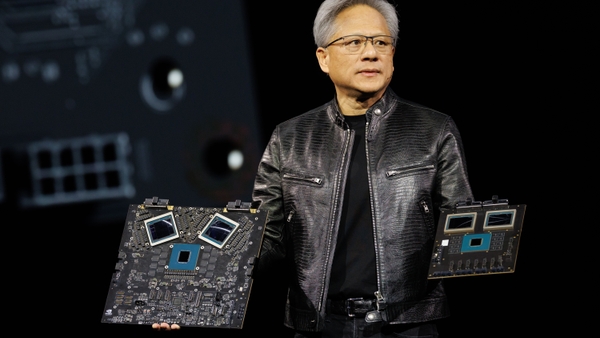
NVIDIA (NASDAQ: NVDA), trading near $186.23 after roughly 40% gains over the last twelve months, received a fresh price target increase from $250 to $275, implying around 47% upside. The ramp of the Blackwell and Rubin platforms, with associated systems sales and software stack, keeps NVDA at the center of the acceleration market. The risk is less about demand and more about positioning and valuation; relative value now looks better in MU and TSM, but benchmarked portfolios cannot ignore NVDA without accepting underperformance risk if AI spending again surprises higher.
For the coming week and quarter, TSM and MU screen as Buy, with NVDA as core Buy/Hold where position sizes are already large.
Banks, Credit Caps and Mixed Signals from Financials
Financials delivered a split message. On one hand, money-center banks such as JPMorgan Chase (NYSE: JPM) and Bank of America (NYSE: BAC) fell around 5% on the week despite solid earnings, as investors reacted to renewed political discussion of a potential 10% cap on credit card interest rates. Such a cap would compress returns in key consumer lending segments and could force repricing of risk models. On the other hand, PNC Financial (NYSE: PNC) rallied after reporting Q4 revenue of about $5.96 billion against expectations near $5.89 billion and EPS of roughly $4.88 versus estimates near $4.22, while guiding for total revenue growth near 11% by the end of 2026 compared with consensus around 8.7%. Large-cap banks with diversified revenue and stronger fee pools remain better positioned than pure card-centric models. For the week ahead, megabank stocks are a Hold, with tactical buy-the-dip only in names where capital ratios, fee income and deposit bases are clearly superior.
Read More
-
SMH ETF Around $400: AI Memory Boom, Nvidia Pipeline And CHIPS Act Push ETF Toward $550–$577
17.01.2026 · TradingNEWS ArchiveStocks
-
XRP ETFs XRPI And XRPR Draw $56.8M Weekly Inflows As XRP Stalls Around $2.08
17.01.2026 · TradingNEWS ArchiveCrypto
-
Natural Gas (NG=F) Hovers Near $3.01 As 45% Correction Meets $2.95–$2.89 Support Zone
17.01.2026 · TradingNEWS ArchiveCommodities
-
USD/JPY Price Forecast - USDJPY=X Around 158.00: Intervention Warnings And Election Moves Clash With A Wide Rate Gap
17.01.2026 · TradingNEWS ArchiveForex
Consumer and Health: NVO, LLY, PLAY and the GLP-1 Trade
In healthcare and consumer discretionary, GLP-1 names and experiential brands continued to define the tape. Novo Nordisk (NYSE: NVO) jumped around 6–9% on strong early uptake of its oral Wegovy obesity treatment, with about 1.3% of total Wegovy prescriptions already shifting to the pill form in the first week of U.S. launch, even during a holiday week. Year-to-date gains near 18% contrast with a roughly 27% decline over the past twelve months as competition from Eli Lilly (NYSE: LLY)’s Zepbound compressed valuations. The fast adoption of oral GLP-1 supports the thesis that weight-loss therapies will migrate from niche injectables to mass-market chronic treatments, underpinning multi-year revenue and cash flow growth for both names.
In U.S. experiential consumption, Dave & Buster’s (NASDAQ: PLAY) was upgraded with a target near $30, implying roughly 55% upside from levels around $19.50–$19.68. The call is built on expectations of the first positive same-store sales print in about 13 quarters, driven by better food and beverage execution and traffic from new promotions such as half-price events. The macro risk is that a pullback in discretionary spending would hit highly leveraged experiential names quickly, but for now the micro data support a selective Buy stance on the stock.
Energy, Utilities and Oil: COP, MGY, EQNR and Power Infrastructure
In energy, the week featured both valuation reset and infrastructure opportunity. ConocoPhillips (NYSE: COP) was downgraded to an underperform stance, with the key issues being an oil breakeven around $53 WTI, well above peers, and a debt-adjusted free cash flow yield near 4.4%. Long-cycle projects such as Port Arthur LNG and Willow, with start-up still about two and four years away respectively, are absorbing capital while contributing nothing to current cash returns, raising doubts about the sustainability of the company’s target of returning around 45% of cash flow at a forecast $57 WTI price deck. In contrast, Magnolia Oil & Gas (NYSE: MGY) was upgraded to Buy with a breakeven closer to $37 WTI and a raised target near $28, implying roughly 24.5% upside from prior close, supported by stronger operating momentum exiting Q4 2025.
On the power side, the administration’s push for technology companies to co-finance new generation for energy-hungry data centers is driving gains in grid and infrastructure names. GE Vernova, Bloom Energy (NYSE: BE) and Quanta Services (NYSE: PWR) each advanced roughly 5–6%, while independent power producers Constellation Energy (NASDAQ: CEG) and Vistra (NYSE: VST) fell around 7–10% as investors rotated toward grid enablers and away from names perceived as more exposed to policy and hedging risk. Offshore, Equinor (NYSE: EQNR) received legal clearance to resume its Empire Wind project in the U.S., lifting the stock modestly and keeping the offshore wind pipeline alive after a difficult year of cancellations and renegotiations.
Transports and Logistics: JBHT and Freight Signalling Demand
In transports, J.B. Hunt Transport Services (NASDAQ: JBHT) reported a 2% year-over-year decline in Q4 revenue to about $3.10 billion, matching consensus, while delivering EPS around $1.90 against expectations near $1.81. The stock is up roughly 6.3% year-to-date and recently hit a fresh 52-week high near $204.38, even after a small post-earnings pullback of about 1%. Management flagged weaker demand in final-mile services due to softer end-markets and a less favorable mix, but the core earnings beat shows that disciplined cost control and network optimization are partly offsetting top-line softness. For the week ahead, the transport sector remains a clean real-economy signal; sustained strength in JBHT suggests that freight volumes are stabilizing rather than collapsing, consistent with a soft-landing narrative.
India Equities and Nifty 50: Range-Bound with IT-Led Rebounds
In India, benchmarks broke a two-session losing streak. The Sensex closed up about 188 points (+0.23%) at 83,570.35, while the Nifty 50 added around 29 points (+0.11%) to 25,694.35. Gains were driven primarily by heavyweight IT stocks such as Infosys, TCS and Tech Mahindra, as upgraded revenue outlooks lifted sector sentiment and reinforced the spill-over from global AI and digital-transformation spending. The Nifty continues to trade in a corrective consolidation zone after sharp declines from recent highs. A base has formed near 25,600–25,550, where repeated buying emerges and short-term demand is visible. Price sits below the 20-, 50- and 100-hour EMAs, signaling weak short-term momentum, while the 200-hour EMA around 25,940 acts as the key overhead resistance band. Local stock recommendations favor Grasim Industries (NSE: GRASIM), JSW Steel (NSE: JSWSTEEL) and Bank of Baroda (NSE: BANKBARODA) on a tactical basis, with upside potential framed within this range-bound index context. For the coming week, Nifty 50 is range-trade Hold, with buy levels clustered near the 25,550–25,600 demand zone and profit-taking near the 25,900–26,000 resistance band.
Macro Bears, AI Bubble Fears and the Doom Narrative
Macro bears who successfully called past bubbles are again flagging risks, this time focusing on the combination of record AI capex, high debt loads and stretched equity valuations. The concern is that a $1 trillion-scale semiconductor and AI infrastructure boom, supported by hundreds of billions in planned hyperscaler spending, could morph into a broader asset bubble if earnings growth fails to keep pace with expectations. At the same time, non-withheld U.S. income tax receipts of about $112.6 billion at the January estimated tax deadline, up roughly 52% from $74.1 billion a year earlier and from $68.3 billion the year before that, show that capital gains and business income are very strong. That supports the soft-landing narrative but also confirms that investors are heavily exposed to risk assets. If AI or tech profits were to disappoint, there is enough leverage in sentiment and positioning to produce a sharp correction.
Davos, Earnings Wave and Next-Week Catalysts
Next week’s tape will be driven by three clusters of catalysts. First, the World Economic Forum in Davos will bring together global political and business leaders, with markets sensitive to any signals on trade, tariffs, AI regulation and energy transition. Second, earnings season intensifies with key reports from names such as Johnson & Johnson (NYSE: JNJ), Intel (NASDAQ: INTC) and Netflix (NASDAQ: NFLX), which will set the tone for healthcare defensives, legacy semiconductors and streaming-plus-advertising models. Third, the Supreme Court’s hearing on the attempt to remove Fed Governor Lisa Cook will add another layer of uncertainty around central-bank governance. Combined with ongoing speculation about the next Fed chair and a 10-year yield holding above 4.2%, these events can either validate the current risk-on stance or trigger the overbought correction that technical indicators are warning about.
Trading Stance: Indexes, AI Leaders and Key Single-Stock Calls
After integrating the macro, technical, sector and single-stock data, the positioning call is as follows. The S&P 500 and Nasdaq are Hold, not chase levels, with an elevated probability of a 5–10% pullback driven by overbought breadth, high bullish sentiment and rising long yields. Investors with underweight exposure can use controlled weakness in the 6,600–6,800 S&P zone and the 22,500–23,000 Nasdaq zone as incremental entry windows rather than adding at current levels. The Dow remains a neutral Hold, with less upside torque but smaller drawdown risk than the Nasdaq. The Russell 2000 is Hold / partial trim, given the 11-session outperformance streak and year-to-date gains above 8%; the risk-reward now relies heavily on a benign rates backdrop.
In single names, TSM and MU are Buy, backed by hard earnings math and structural AI demand that can support sustained EPS growth well above the market. NVDA remains a core Buy/Hold, appropriate to maintain but better added on pullbacks than chased at current valuations. Within financials, diversified banks such as PNC are selective Buy on dips, while card-exposed names and those most sensitive to potential interest-rate caps are Hold to underweight until policy risk clears. In energy, MGY is Buy on attractive breakevens and improving guidance, while COP trends toward Sell / underweight as long as breakevens stay near $53 WTI and capital is tied up in long-cycle projects without immediate cash-flow support. In healthcare, NVO and LLY remain Buy/Hold as the GLP-1 franchise expands into oral formulations and higher-dose indications, with near-term volatility but robust multi-year earnings runways.
Overall, the week ahead for global equities is short-term cautious, medium-term constructive: overbought conditions, rising yields and noisy politics argue for patience on index exposure, while AI infrastructure leaders, high-quality energy and select banks and GLP-1 names still justify Bullish Buy ratings on weakness rather than any broad de-risking.