Stock Market Today: Dow And S&P 500 Hover Near Records As NVDA, TSLA, PLTR, NKE And CPNG Lead Moves
Dow at 48,685 and S&P 500 near 6,927 as Nvidia’s $20B Groq deal, TSLA and PLTR focus, NKE insider buy, CPNG +9%, ORCL slumps and gold hits $4,561 | That's TradingNEWS
Market Overview: Quiet Session On The Surface, Strong Week Underneath
Nasdaq, S&P 500 And Dow Hover Near Records In Thin Trading
The S&P 500 (^GSPC) trades around 6,927–6,936, down roughly 0.06% on the day but still holding near fresh all-time highs. The Nasdaq Composite (^IXIC) sits near 23,577–23,646, lower by around 0.15%, and the Dow Jones Industrial Average (^DJI) is roughly 48,685–48,712, off about 0.09%. Index futures earlier pointed to essentially the same picture: Dow futures down about 0.1%, S&P 500 futures fractionally softer, Nasdaq-100 futures slightly positive. This looks like nothing is happening, but on a weekly and yearly view it is the opposite. All three majors are up more than 1% for the week and have logged five straight winning sessions, while both the Dow and S&P 500 recently set record closes. The S&P 500 is now up around 18% in 2025, on track for its sixth 15%+ gain year out of the last seven, while the Nasdaq has climbed more than 20% despite a brief bear-market phase after the April tariff shock. The Santa Claus rally window – the last five trading days of the year plus the first two of the new year – is open, and historically the S&P 500 has delivered about 1.3% average gains in this period since 1950. Price action so far fits that pattern: thin volume, mild intraday softness, but an underlying bullish bias into year-end.
AI Leadership: Nvidia, Palantir And Tesla Keep Growth Risk Pointed Higher
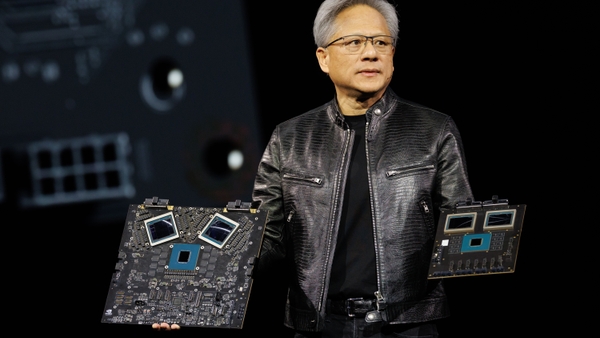
AI remains the core risk engine for Nasdaq and S&P 500 performance. Nvidia (NVDA) trades modestly higher, roughly +0.5% to +1.1%, after confirming a $20 billion cash asset deal to acquire AI-inference-related assets from Groq. This is the largest transaction in Nvidia’s history and tightens its grip on critical inference technology just as hyperscalers plan the next wave of AI data centers. The market is still willing to treat NVDA as both a macro bellwether and a stock in a buyable zone, with the company holding the title of most valuable public company globally. That sends a clear message: despite constant “AI bubble” talk, real money is still leaning into NVDA on concrete deal flow.
Palantir Technologies (PLTR) and Tesla (TSLA) also sit in technical buy zones, and both are used as satellites around the Nvidia core. For PLTR, the thesis remains long-duration government and enterprise demand for AI-enabled defense and data platforms. For TSLA, the narrative is dominated by robotaxi optionality. There are five days left for Elon Musk to deliver on the promise of removing robotaxi safety monitors, which keeps speculative capital engaged. As long as NVDA, PLTR and TSLA trade with positive skew, the Nasdaq retains upside torque even with headline valuations stretched.
Semiconductors And Memory: Micron And SanDisk Gain From HBM Pricing Muscle
The AI supply chain story extends past Nvidia into memory. Micron Technology (MU) is up nearly 2%, and SanDisk jumps around 4%, after reports that Samsung Electronics and SK Hynix are preparing to raise prices on fifth-generation HBM3E chips by close to 20% for 2026 deliveries. This kind of pricing move is not marginal. HBM is the constraint component for many advanced AI systems, and a ~20% contract price increase indicates that demand from hyperscalers remains robust enough to sustain higher costs. For MU and SanDisk, that shift directly supports revenue and margin assumptions into 2026. For Trading News readers, the key point is that AI infrastructure is still in an expansion phase, not a plateau. When suppliers can push through double-digit price hikes and still expect orders to fill, the sector’s earnings momentum is not done.
Oracle: AI Cloud Ambitions Collide With The Worst Quarter Since 2001
Oracle (ORCL) shows what happens when the market stops believing the AI execution story. The stock trades near $196.80, down about 0.35% on the day, but the intraday move is marginal compared with the bigger picture: ORCL is down roughly 30% this quarter, setting up its sharpest quarterly drop since the 2001 dot-com bust. Three months after appointing Clay Magouyrk and Mike Sicilia as co-CEOs, investors are openly questioning whether Oracle can build enough data-center capacity to justify OpenAI’s more than $300 billion multi-year cloud spend commitment. With the S&P 500 up about 18% year-to-date and at a record, a 30% quarterly slide in ORCL is severe underperformance. The message is simple: the AI cloud narrative alone is not enough; markets now demand hard evidence of scale, margins and speed. Until Oracle proves it can convert that giant AI contract into tangible capacity and stable returns, the stock sits firmly in laggard territory, and relative to AI leaders like NVDA and memory names like MU, ORCL screens as a Sell / Underweight.
Ross Stores: Off-Price Retail Uses Expansion To Beat The S&P 500
In consumer discretionary, Ross Stores (ROST) stands out for going against the industry’s footprint reduction trend and getting paid for it. During 2025, Ross opened 90 new stores across Ross Dress for Less and dd’s Discounts, while peers such as Dollar General (DG) guided to closing around 100 stores and Walgreens (WBA) announced hundreds of store closures. The equity response has been decisive. ROST printed a fresh all-time high earlier in December, and the stock is up more than 20% this year, compared with roughly 17.9% for the S&P 500. The move accelerated after Ross posted better-than-expected third-quarter results and raised fourth-quarter guidance, signaling that value-focused consumers are still spending and that Ross is taking share from weaker chains. The stock has also held up despite tariff fears and macro uncertainty, which positions ROST as a structural retail outperformer going into 2026. From a portfolio standpoint, this is the type of name that justifies a Buy on consolidation, not a short-term trade to fade.
Nike: Tim Cook’s $3 Million Purchase Reinforces The Turnaround Narrative
Nike (NKE) is another stock inside the Dow drawing attention with a clean insider-signal type catalyst. After rallying 4.6% on Christmas Eve to become the top performer in both the Dow and S&P 500 that session, the stock adds roughly 0.4%–0.5% today, trading around $60.26. The driver is a regulatory filing showing Apple (AAPL) CEO Tim Cook, a Nike board member since 2005, nearly doubled his stake, buying approximately $3 million worth of NKE shares.
Fundamentally, Nike is still managing weakness in China and problems at the Converse brand; CEO Elliott Hill describes the turnaround as being in the “middle innings”. But a board-level insider with Cook’s profile committing millions of dollars at these levels is a strong vote of confidence in the “Win Now” strategy. The stock had already been under pressure earlier this year, so the combination of prior de-rating plus fresh insider buying shifts the balance toward accumulation rather than further compression. Within the Dow, NKE now sits in the improving bucket, not the problem bucket.
Coupang: Data Breach Overhang Eases And The “Amazon Of Asia” Rebounds
Coupang (CPNG) is one of the day’s most aggressive movers. The stock trades around $24.97, up about $2.17, a gain of roughly 9.5% in early trading. Earlier this month, CPNG had been hit for about 17% downside after disclosing a data breach affecting information tied to 33 million customers, which sparked a confidence shock. The company has now provided more precise details: a former employee was responsible, and the actual data involved corresponded to roughly 3,000 customers, with no evidence of transfer to third parties and the information subsequently deleted. That sharply reduces the perceived systemic risk. A class-action lawsuit from shareholders is still in play, so headline risk has not disappeared, but the probability of an uncontrolled, large-scale data-loss scenario has fallen. For a fast-growing e-commerce platform marketed as the “Amazon of Asia”, moving from an undefined cyber risk to a bounded, internal incident is enough to trigger short covering and fresh buying. The +9% move today looks more like the start of a repair phase than just a one-off bounce.
Metals: Gold, Silver And Platinum Mark A New Level For The Safety Trade
The harshest repricing on the screen is in precious metals, not equities. Gold futures (GC=F) push to another all-time high, with recent prints around $4,548–$4,561 per ounce, up roughly 1% on the day. Silver (SI=F) also hits a record, touching about $75.84 and recently trading near $74.55, a 4% intraday surge. Platinum (PL=F) joins with new highs of its own. Year to date, the returns are extreme: gold up around 70% in 2025 and silver up more than 150%, putting both on track for their best annual performance since 1979. The drivers are layered. The Federal Reserve has cut rates three times in 2025, pulling real yields lower and directly supporting non-yielding assets. The U.S. dollar index (DX=F), now around 97.91, is softer, which mechanically boosts metals priced in dollars. Central banks continue adding to gold reserves, and ETFs holding metals show persistent inflows. Geopolitical tension is an additional accelerant: a U.S. blockade of Venezuelan oil tankers and a U.S. strike on ISIS-linked targets in Nigeria have heightened risk aversion. The combination of record equities and record gold and silver in the same year signals a barbell positioning regime: investors are running long risk assets and long hard assets simultaneously. Trend-wise, gold and silver remain clear Buys as long as the rate path and geopolitical backdrop stay aligned with this dynamic.
Read More
-
PayPal Stock Price Forecast - PYPL at a Five-Year Low: Deep-Value Bet at $57 With Upside Toward $100–$120
20.01.2026 · TradingNEWS ArchiveStocks
-
XRP ETF Focus: Are XRPR at $15.56 and XRPI at $10.96 Setting Up a Rebound?
20.01.2026 · TradingNEWS ArchiveCrypto
-
Natural Gas Price Jumps Above $3.80 on Arctic Blast as Traders Target the $4.00 Line
20.01.2026 · TradingNEWS ArchiveCommodities
-
Stock Market Today - Dow Jones, S&P 500 and Nasdaq Tumble as Greenland Tariffs Trigger ‘Sell America’
20.01.2026 · TradingNEWS ArchiveMarkets
-
USD/JPY Price Forecast - USDJPY=X Eyes 160 as Japan’s Fiscal Shock Overpowers Classic Safe-Haven Flows
20.01.2026 · TradingNEWS ArchiveForex
Energy: WTI And Brent Log Their Strongest Week Since October
Energy prices soften intraday but register a meaningful weekly move higher. West Texas Intermediate crude (CL=F) trades near $57.77–$57.90 a barrel, down around 0.5%–1.0% today, yet up more than 3% on the week, marking its largest weekly advance since late October. Brent crude (BZ=F) holds above $62, also showing a 3%+ weekly gain. The catalyst is almost entirely geopolitical. A partial U.S. blockade of Venezuelan crude shipments – including a sanctioned tanker turning away from the country – compresses available barrels for some buyers. At the same time, a U.S. military strike in Nigeria introduces additional supply risk in West Africa. For producers, the mid-to-high $50s on WTI do not radically change capital plans, but the return of a geopolitical risk premium keeps the sector relevant as a volatility and inflation hedge. For energy equities, this type of weekly move supports cash-flow expectations and dividends, even if the tape has not yet repriced to a full-blown oil shock.
Rates, Dollar And Bitcoin: Supportive Backdrop For Risk And Metals
The 10-year U.S. Treasury yield edges down to about 4.12%, compared with 4.13% at Wednesday’s close. The basis-point move is small, but directionally it reinforces both equity multiples and the metals rally. Lower yields reduce the opportunity cost of holding non-yielding assets like gold and silver and help justify premium P/E ratios in S&P 500 growth segments. The U.S. dollar index (DX=F) at about 97.91 is fractionally lower, adding incremental fuel to commodities priced in dollars and to non-U.S. risk assets.
Bitcoin (BTC-USD) trades near $89,000, recovering from an earlier intraday low around $86,900. That bounce, in a session where equities are almost flat and metals are making new highs, underscores that crypto is behaving as a high-beta macro hedge rather than a pure tech proxy. With equities, metals and Bitcoin all positive on a multi-month horizon, the tape reflects a broad liquidity-driven and debasement-driven trade, not a narrow single-asset story.
Macro Narrative: Jobs Volatility, Tariffs And “AI Bubble” Talk Versus Price Reality
Macro headlines over the last weeks have not matched the price behavior. Recent ADP data showed the U.S. private sector shed 32,000 jobs in November, compared with expectations for a small gain, which in a traditional cycle would have sparked deep recession worries. Instead, the Dow is near 48,700, the S&P 500 is at record highs, and the Nasdaq is up more than 20% for the year after briefly slipping into bear-market territory when President Trump launched his sweeping tariffs in April. Market commentary focuses on a potential AI bubble, elevated corporate debt at some AI-heavy S&P 500 components, and the risk of another government shutdown or a reacceleration in inflation if tariffs expand further. Yet the indices have largely ignored these concerns into late 2025. That does not eliminate downside risk; it simply shows that earnings, AI capex and liquidity continue to outweigh macro fear narratives in the current regime. Positioning remains optimistic unless and until there is a clear policy or growth shock.
Seasonality, Liquidity And The Structure Of Today’s Tape
Today’s session is structurally constrained by calendar and liquidity factors. U.S. markets were closed for Christmas, leaving this as the only trading day between the holiday and the weekend, which naturally suppresses volume and risk-taking. There are no major economic releases and no significant earnings reports scheduled into the close, so direction is dictated mainly by positioning and technical flows rather than new fundamental information. Fed funds markets assign less than a 15% probability to a rate cut at the next meeting, with a more balanced expectation for March 2026, which keeps the current “higher for slightly longer” narrative intact but not aggressive enough to break the equity uptrend. In that context, the indices drifting near records while NVDA, PLTR, TSLA trade constructively, CPNG spikes, ORCL lags, ROST and NKE outperform, and gold and silver push into new territory is exactly what a late-December, Santa-rally, low-volume market looks like.
Trading News Stance: U.S. Equities Bullish Hold, Select AI, Metals And Retail Still Buys
When all the data points are stacked together, the picture is clear. The S&P 500 is up around 18% this year, at a record; the Nasdaq is higher by 20%+ even after tariff and “AI bubble” scares; the Dow sits near 48,700 after five consecutive gains; gold is up roughly 70%, silver more than 150%, both at all-time highs; WTI (CL=F) is back near $58 with the biggest weekly rise since October; the 10-year yield is around 4.12%; Bitcoin trades near $89,000; NVDA, PLTR, TSLA remain in buyable zones; ROST, NKE and CPNG are delivering clear stock-specific outperformance, while ORCL is suffering a 30% quarterly collapse.
Broad U.S. large-cap equities (S&P 500 / Nasdaq) deserve a Bullish Hold stance: valuations are elevated, but momentum, earnings resilience, AI capex, seasonality and a slightly softer rate and dollar backdrop argue against a Sell call here. Within that, AI leaders like NVDA, PLTR and TSLA justify Buy on pullback, not indiscriminate chasing, while the trend remains favorable. Gold and silver (GC=F, SI=F) are outright Buys as long as the combination of rate cuts, geopolitical tension and central-bank demand stays in place. Ross Stores (ROST), Nike (NKE) and Coupang (CPNG) are selective Buy ideas, supported by hard catalysts and visible outperformance versus the indices. On the other side, Oracle (ORCL) remains a Sell / Underweight, with a 30% quarterly drawdown and unproven AI-scale execution making it one of the few genuine losers in an otherwise bullish tape.