


Crypto Regains the Handle: Bitcoin (BTC-USD) $89,616.72 (+1.59%) After Dipping Near $87,900
Crypto followed the risk tone. Bitcoin traded around $89,616.72 (+1.59%), after overnight lows near $87,900, effectively reattacking $90,000. This matters because it links back to the same “hard-asset” impulse driving gold and silver—capital looking for scarcity and optionality while the dollar weakens.
Equity proxies also moved. Strategy (MSTR) and Mara Holdings (MARA) were up about 2%, Robinhood (HOOD) gained 1.9%, and Bullish was up nearly 1%. That cluster rising together typically signals a coordinated “crypto beta” bid rather than isolated stock-specific news.
Deal Tape Dominates Financials: Janus Henderson (JHG) Bought for $7.4B at $49 Per Share
The cleanest corporate-event number set today was Janus Henderson (JHG): a take-private agreement valuing the firm at about $7.4 billion, priced at $49 per share in cash. The premium was not aggressive but decisive: about 6.5% above Friday’s close and roughly 18% above the Oct. 24 level. The expected close timing—mid-2026—tells you this isn’t a fast arb flip; it’s a conviction buy by the sponsors.
This kind of transaction supports a broader “public-to-private” bid under the surface, especially in asset management where scale and distribution can be optimized.
Litigation Hits Industrials: Honeywell (HON) Flags $310M Revenue Hit and $370M Operating Income Hit in Q4
Honeywell (HON) was the opposite type of catalyst: accounting and litigation pressure. The company guided to a one-time Q4 charge tied to Flexjet settlement talks that would reduce GAAP sales by ~$310 million and operating income by ~$370 million. It also flagged total one-time cash payments tied to the Flexjet matters of about $470 million.
There’s also structural reshaping underway: reporting an Advanced Materials unit as discontinued operations beginning in Q4, after a spin event dated Oct. 30, and aligning segments ahead of a planned aerospace spin in 2H 2026. The market response was straightforward: the charge is large enough to weigh on near-term optics even if it cleans up a messy overhang.
Media M&A Heats Up: Paramount Skydance (PARA) +7.08% and Warner Bros. Discovery (WBD) +3.10% on Ellison’s $40.4B Guarantee
Media was a pure financing story. WBD traded at $28.63 (+3.10%), while Paramount Skydance Class B printed $13.97 (+7.08%). The key number was the backstop: Larry Ellison provided an irrevocable personal guarantee of $40.4 billion of equity financing for the offer and potential damages claims.
A rival bid dynamic was also part of the tape. A competing suitor reportedly lined up $25 billion of bank lending. When you see equity rally on both sides, the market is pricing a rising probability of a finalized deal and/or a higher clearing price. The risk is equally clear: leverage and integration risk do not disappear; they just get postponed until terms are locked.
**Stock-Specific Movers Beyond the Megacaps: TSLA, RKLB, CWAN, CRWV, NBIS, AEM
Some of the strongest single-name moves were event-driven. Tesla (TSLA) rose about 3% after winning a Delaware legal fight over a 2018 pay package, removing a long-running governance overhang. Rocket Lab (RKLB) jumped about 8%, extending Friday’s move after a major satellite contract described as its largest single award to date.
Private-equity activity lifted software. Clearwater Analytics (CWAN) traded around $24.07 (+8.18%) after a cash deal at $24.55 per share. In AI-adjacent equities, CoreWeave (CRWV) was cited around $86.62 (+4.36%) and Nebius (NBIS) around $93.92 (+4.99%), both extending momentum from the prior session. In metals-linked equities, Agnico Eagle Mines (AEM) traded around $178.96 (+2.73%), consistent with gold’s record run.
Rates, FX, and Japan: US10Y 4.169%, DXY 96.10, Japan 10Y Yield 2.081% After a 0.75% Policy Rate
The macro mix stayed supportive for equities: the 10-year Treasury yield around 4.169% is firm but not spiking, and the Dollar Index at 96.10 (-0.36%) acts as fuel for commodities and multinationals. Japan remains the global outlier on the rate path. Japan’s 10-year yield was cited at 2.081%, after briefly hitting 2.1%, following a Bank of Japan policy rate at 0.75%—the highest since 1995. That matters for U.S. markets because higher Japanese yields can pull capital back home and pressure global liquidity if the move accelerates.
The Growth Print the Market Is Bracing For: Q3 GDP Expected at 3.2% Annualized After Shutdown Delays
A major near-term macro input is the delayed Q3 GDP report, expected to show 3.2% annualized growth, down from 3.8% in Q2 but above the post-2021 average near 2.6%. The data is stale because shutdown disruptions delayed the release schedule, which increases the chance the market treats it as a narrative check rather than a live trading trigger.
Separately, the tariff backdrop is still distorting macro readings because imports subtract from GDP, which has made headline GDP less clean. One scenario analysis suggested reversing tariffs could lift global growth to 3.0% in 2026 and 3.4% in 2027, versus 2.7% and 2.9% if policy stays unchanged—roughly a 0.5 percentage-point boost per year.
Santa Rally Math and the Real Calendar: Dec 24 to Jan 5 Starts the Seven-Session Window
The market is now entering the most watched seasonal window. The “Santa Claus rally” period is defined as the last five trading days of the year plus the first two of the new year, which this cycle maps from Dec. 24 through Jan. 5. Long-run stats cited: average gain around 1.3%, and a broader range cited near 1.3%–1.65, with the market finishing higher roughly three-quarters of the time. The cautionary comp is last year’s opposite outcome: a “Santa selloff” with the major indexes down roughly 0.4%–0.7%.
Liquidity matters more than seasonality this week. The U.S. stock market closes early on Wednesday at 1 p.m. ET for Christmas Eve and is closed Thursday for Christmas Day, with normal trading resuming Friday.
Sector Tells: Utilities Break While Energy Leads and Banks Grind Higher
Beneath the index, the market is punishing defensives. Utilities were one of the only groups in the red early, down about 0.5%. The weakness was concentrated in large constituents: Dominion Energy (D) down roughly 4.5% and Eversource Energy (ES) down about 3%.
Financials held in. The KBW Nasdaq Bank Index was 166.50 (+0.69%), a modest but important confirmation that the tape isn’t only one tech headline. Commodities also reinforced the inflation-hedge tone: the S&P GSCI Spot Index was 548.22 (+1.11%).
Final Trading Call: Bias and Ratings After the Full Tape
The price map shows two simultaneous trades working: AI beta re-risking and hard-asset accumulation. With VIX 14.53, SPX 6,863.76, COMP 23,413.76, and RUT +1.08%, the burden of proof is on bears to stop the grind higher into thin holiday liquidity. The key risk is policy and rate shock: if yields jump materially above the 4.17% zone or if the China chip timeline stalls, the same crowded winners can reverse quickly. Right now, the data you provided supports staying constructive with selectivity.
Buy/Sell/Hold — Indexes, Macro Assets, and Key Stocks
S&P 500 (SPX): Buy on trend + falling volatility with 6,863 support holding.
Nasdaq (COMP): Buy with AI breadth improving via NVDA, MU, AMD.
Dow (DJIA): Hold because it’s up but less torque than Nasdaq/Russell.
Russell 2000 (RUT): Buy on 1.08% outperformance signaling broader risk-on.
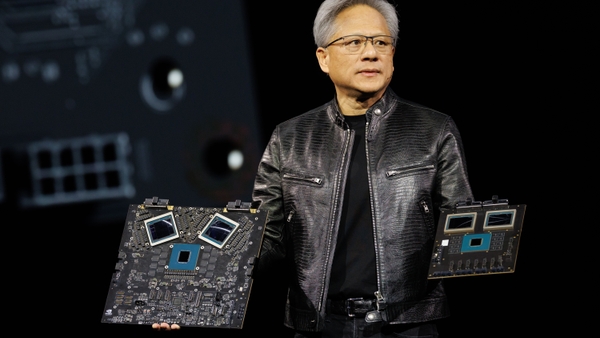
NVIDIA (NVDA): Buy on renewed shipment pathway and leadership behavior at $183.22.
Oracle (ORCL): Buy as a re-rating candidate after -42% peak-to-trough and $280 bull case.
Micron (MU): Buy with +3.5% confirmation that AI demand is broadening into memory.
AMD (AMD): Hold because it’s participating, but without a distinct catalyst in this dataset.
Honeywell (HON): Hold due to $310M sales hit, $370M op income hit, $470M cash impact.
Janus Henderson (JHG): Hold if already owned; the $49 cash deal caps upside.
Paramount Skydance (PARA): Speculative Buy while financing certainty improves at $13.97.
Warner Bros. Discovery (WBD): Speculative Buy on deal optionality at $28.63.
WTI (CL=F): Buy on geopolitical premium rebuilding at $57.84.
Brent (BZ=F): Buy with $61.85 reclaiming risk premium.
Gold (GC00): Buy with $4,454 momentum plus 68% YTD trend strength.
Silver (SI00): Buy with $68.75 and >100% YTD leverage to the same thesis.
Bitcoin (BTC-USD): Speculative Buy as it re-tests the $90,000 zone at $89,616.72.